The Rolls-Royce Wraith spent a decade making an unlikely argument: that a marque built entirely around insulating its owners from the road could also build a car that genuinely wanted to be driven. When the Wraith debuted at the 2013 Geneva Motor Show, Rolls-Royce called it the most dynamic car in company history — a bold claim for a brand whose whole identity rested on the opposite idea. By the time production ended a decade later, the Rolls-Royce Wraith had backed that claim up with the most powerful V12 the marque had ever fitted to a production car, a design language unlike anything else in the Rolls-Royce catalog, and two features — the Starlight Headliner and the Black Badge program — that would go on to define the brand’s next era.
A Different Kind of Rolls-Royce
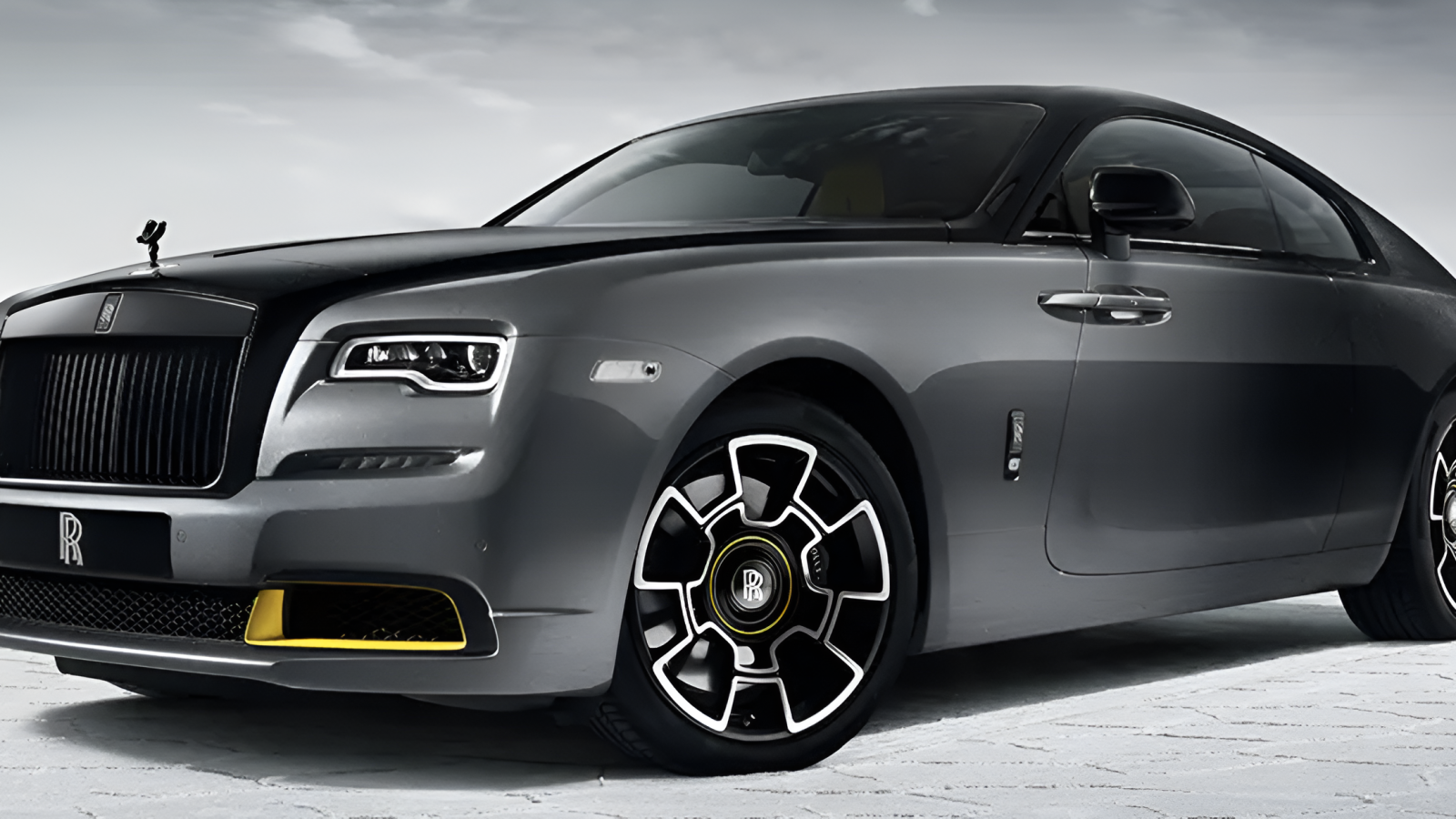
Built on the same architecture as the Ghost, and by extension sharing lineage with the BMW 7 Series, the Rolls-Royce Wraith took that platform’s composure and pointed it, for the first time in the modern era, toward something closer to sport. The result was a two-door fastback coupe with a rakish, sharply sloped roofline unlike anything else in the Rolls-Royce lineup at the time, and a presence that felt less like a chauffeured saloon and more like a car its owner might actually want to drive quickly, on occasion, and alone.
That shift in character mattered more than it might sound. Rolls-Royce had spent the better part of a century cultivating an image built around effortless detachment from the road — the sense that the car, not the driver, was doing all the work. The Wraith didn’t abandon that philosophy so much as complicate it, offering owners the option of engagement without ever fully surrendering the marque’s trademark isolation and comfort.
Rolls-Royce Wraith Engine and Performance Specs
Under the bonnet of the Rolls-Royce Wraith sat a 6.6-liter twin-turbocharged V12 producing 624 horsepower and 590 lb-ft of torque in its final specification — figures that made the Wraith, at the time of its retirement, the most powerful production Rolls-Royce ever built. It reached 60 mph in a little over four and a half seconds, a number that would have been unthinkable from the marque a generation earlier, delivered with the same eerie absence of strain that Rolls-Royce brings to everything else in its lineup.
Key Rolls-Royce Wraith specs at a glance:
- Engine: 6.6-liter twin-turbocharged V12
- Power: 624 horsepower
- Torque: 590 lb-ft
- 0–60 mph: Just over 4.5 seconds
- Body style: Two-door fastback coupe
- Platform: Shared architecture with the Rolls-Royce Ghost
The Wraith’s satellite-aided transmission was, in its own quiet way, one of the more forward-thinking pieces of engineering to appear on any luxury car of the period. Using GPS data to read the road ahead, the gearbox pre-selected the appropriate ratio for upcoming curves before the driver had touched the accelerator, smoothing out a driving experience that might otherwise have felt, by Rolls-Royce standards, unseemly.
Rolls-Royce Wraith Starlight Headliner and Black Badge
It was the Rolls-Royce Wraith that introduced what would become one of the brand’s most recognizable signatures: the Starlight Headliner, a roof lining embedded with hundreds of hand-placed fiber-optic lights arranged to mimic a night sky, installed to the client’s chosen constellation on request. The feature proved so popular that it quickly spread across the rest of the Rolls-Royce lineup, but it debuted here, in a cabin that otherwise looked much like any other Rolls-Royce interior of the era — until the lights came on.
In 2016, the Wraith also became the launch vehicle for Black Badge, Rolls-Royce’s now-familiar program for clients who wanted the marque’s usual composure delivered with sharper edges: darkened chrome, a more aggressive suspension tune, additional torque, and an aesthetic considerably less deferential than tradition dictated. It was, at the time, a genuine departure for a company that had spent a century cultivating exactly the opposite impression, and the Black Badge treatment has since become a permanent fixture across the modern Rolls-Royce range.
The Rolls-Royce Wraith Black Arrow: A Send-Off Built Around a Speed Record
Rolls-Royce closed out the Wraith’s production run in 2023 with the Black Badge Wraith Black Arrow, a twelve-car farewell edition and, officially, the last V12 coupe the marque will ever produce. The car commemorated the 1938 land-speed run of Captain George Eyston, who piloted the Rolls-Royce-engined Thunderbolt to 357.497 mph across the Bonneville Salt Flats — a feat rendered across the Black Arrow in a gradient paint finish transitioning from Celebration Silver to Black Diamond, developed over eighteen months and finished with a glass-infused topcoat meant to echo the cracked salt surface itself.
The details went deeper than the paint. The Starlight Headliner’s 2,117 fiber-optic points were arranged to recreate the exact night sky over Bonneville on the night of the record run; the door panels carried 320 pieces of hand-laid marquetry meant to mimic that same cracked salt texture; and a small aluminum sculpture on the center console, cast in the shape of Thunderbolt’s final aerodynamic form, sat encased in glass and lit from within. Every one of the twelve Black Arrow examples was spoken for before Rolls-Royce had finished describing them.
Rolls-Royce Wraith Price: New and Used Values
When new, the Rolls-Royce Wraith carried a base MSRP in the region of $330,000 to $345,000 before options, with personalization commonly adding anywhere from $50,000 to $150,000 depending on how far a buyer went with bespoke trim, paint, and interior work. The range-topping Black Badge Wraith started meaningfully higher, typically listed from roughly $395,000 to $425,000 before options, and the ultra-limited Black Arrow send-off edition commanded a significant premium over even that on the rare occasions examples have changed hands.
On the used market, Rolls-Royce Wraith values vary widely by year, mileage, and specification. Well-optioned examples with features like the Starlight Headliner and Bespoke interior packages tend to hold value better than base cars, while early Wraiths from the model’s 2013-2014 launch years can now be found well under $150,000. As with most low-volume luxury coupes, condition, service history, and documented options matter enormously to resale value.
The End of an Era, By Design
The Rolls-Royce Wraith’s retirement was never a quiet discontinuation so much as a deliberate closing of a chapter. Rolls-Royce had already begun shifting its engineering resources toward the Spectre, its first fully electric model, and made clear that the Wraith’s departure — alongside that of the Dawn convertible the same year — marked the end of the two-door, V12-powered Rolls-Royce altogether. Future coupes, whenever they arrive, will run on batteries rather than cylinders.
What the Wraith leaves behind is a decade-long argument that a Rolls-Royce could have temperament without sacrificing composure — that a two-ton grand tourer could genuinely enjoy a corner, rather than merely tolerate one. It was never the marque’s best-selling model, nor its most photographed. But for the clients who wanted a Rolls-Royce that felt, if only slightly, like it wanted to be driven rather than simply occupied, the Wraith was the one that finally said yes.