listen to the audio of this article:
Few names in the world of fashion carry the weight, mystique, and cultural authority of Chanel. For more than a century, the house has stood not merely as a purveyor of clothing and accessories but as an idea — that elegance is inseparable from simplicity, that comfort and status need not be opposites, and that a woman’s wardrobe can be a form of quiet liberation rather than decorative confinement. Founded in Paris in 1910 by Gabrielle “Coco” Chanel, the brand has grown from a single millinery boutique into one of the most valuable privately owned luxury conglomerates on earth, encompassing haute couture, ready-to-wear, fragrance, cosmetics, skincare, fine jewelry, and watches. This article traces that journey in detail: the woman who built it, the ideas that defined it, the creative directors who carried it forward, and the business philosophy that has kept it fiercely independent in an industry increasingly dominated by publicly traded conglomerates.
The Early Life of Gabrielle “Coco” Chanel
Gabrielle Bonheur Chanel was born in 1883 in Saumur, France, into a life far removed from luxury. Her mother died when she was young, and her father, an itinerant street vendor, placed her in an orphanage run by nuns at the Aubazine Abbey. It was here, among the austere stone architecture and the black-and-white habits of the sisters, that many historians believe Chanel absorbed the visual vocabulary that would later define her aesthetic: clean lines, monochrome palettes, and a rejection of ornamentation for its own sake. The nickname “Coco” is believed to have originated during a brief stint as a cabaret singer, where she performed songs including one about a girl who lost her dog named Coco.
Chanel’s path into fashion began through her relationships with wealthy patrons, including the textile heir Étienne Balsan and, later, the English businessman Arthur “Boy” Capel, who is often credited with financing her first boutiques and encouraging her entrepreneurial ambitions. While the men in her life opened doors, it was Chanel’s own instinct for design and her unrelenting independence that built the business.
Founding the House
Chanel opened her first shop, a millinery boutique, on Paris’s Rue Cambon in 1910. The hats she designed were deliberately understated compared to the elaborate, feather-heavy creations fashionable at the time, and they quickly attracted a following among actresses and society women who wanted something more modern. By 1913, she had expanded into a boutique in the seaside resort town of Deauville, selling casual sportswear made from jersey fabric, and in 1919 she registered her couture house officially at 31 Rue Cambon, the address that remains Chanel’s spiritual headquarters to this day.
The early 1920s cemented her reputation. She introduced jersey — a humble, stretchy fabric previously used almost exclusively for men’s underwear — into womenswear, prizing its comfort and drape over the stiff brocades and corseted silhouettes that dominated pre-war fashion. This was not simply a style choice; it was a statement about what women’s bodies were allowed to do. Chanel’s clothes let women move, breathe, and work.
A Design Philosophy Built on Liberation
Coco Chanel’s central conviction was that luxury should never come at the expense of comfort. She had lived through an era in which fashionable dress often meant physical restriction, and she built her entire design philosophy in opposition to that idea. She shortened hemlines, dropped waistlines, and eliminated the corset from her designs, favoring instead soft tailoring that skimmed the body rather than constricting it.
She also blurred the line between menswear and womenswear long before “androgynous” became a fashion buzzword. Borrowing directly from the wardrobes of the sailors, stable hands, and aristocratic men she encountered in her early years, she introduced wide-legged trousers, blazers, and cardigan-style jackets into women’s fashion — garments that were functional first and decorative second. This reordering of priorities, function before ornament, remains one of her most enduring contributions to modern dress.
Signature Creations That Changed Fashion
Chanel’s influence rests on a handful of designs so iconic that they have transcended fashion entirely to become cultural symbols recognized even by people with no interest in clothing.
The Chanel Suit. First introduced in the 1920s and refined over subsequent decades, the collarless bouclé tweed jacket paired with a matching skirt became the definitive uniform of understated power. The jacket typically features gold-tone buttons, a signature chain sewn into the hem to ensure it falls perfectly, and braided trim along the edges. It has been reinterpreted by every creative director since Coco Chanel and remains a fixture of nearly every collection.
The Little Black Dress. Popularized by Chanel in a famous 1926 sketch published in American Vogue, the “LBD” took a color previously associated almost exclusively with mourning and repositioned it as the ultimate symbol of versatile elegance. Vogue reportedly compared its simplicity and universal appeal to that of the Ford Model T, suggesting it would become a uniform for women of taste across social classes.
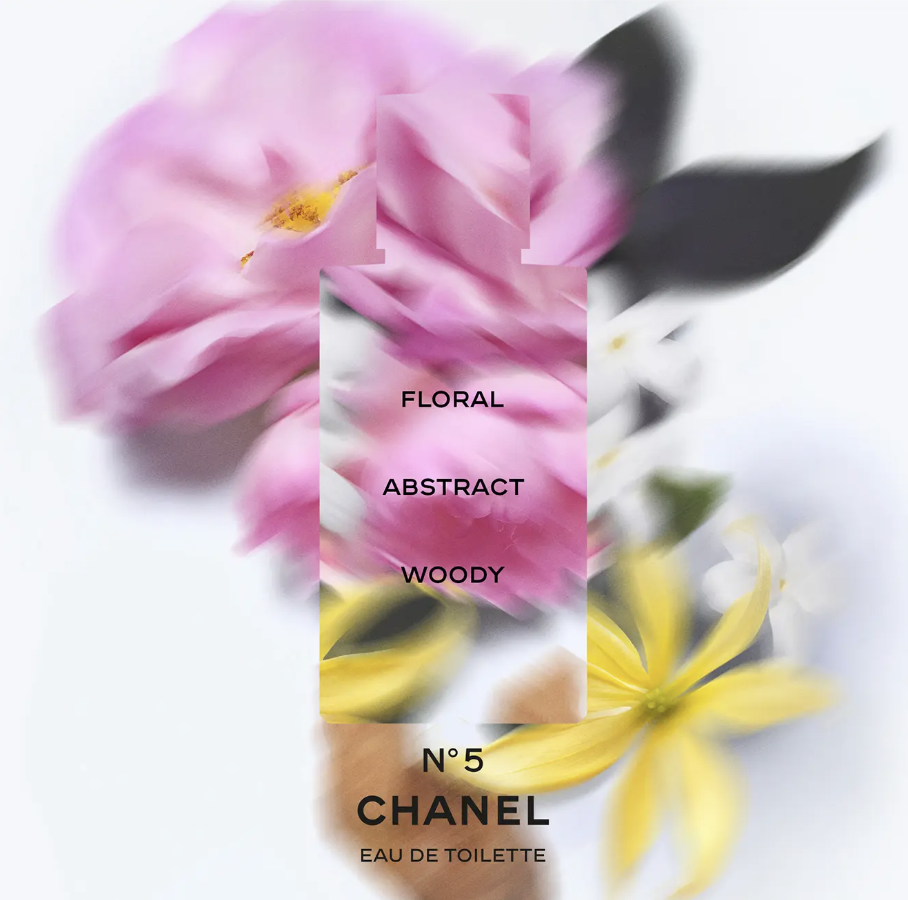
Chanel No. 5. Launched in 1921 in collaboration with perfumer Ernest Beaux, Chanel No. 5 was revolutionary for its use of synthetic aldehydes, which gave it a complex, abstract scent unlike the single-note floral perfumes of the era. Chanel reportedly chose the fifth sample Beaux presented to her, and released it on the fifth day of the fifth month, cementing the number as a recurring motif across the brand. It remains one of the best-selling fragrances in history and has been the subject of advertising campaigns fronted by some of the most famous actresses of the twentieth and twenty-first centuries.
The 2.55 Handbag. Introduced in February 1955 — hence its name — this quilted leather bag with an interwoven chain-and-leather strap was designed to let women carry their bags on the shoulder, freeing their hands at a time when handbags were almost always carried by a top handle. Its diamond quilting pattern, rectangular turn-lock clasp, and burgundy interior lining (said to echo the color of the nuns’ uniforms from her convent childhood) remain unchanged in spirit across the brand’s continuing handbag lines, including the later Classic Flap and Boy bags.
The Camellia Flower. Chosen by Coco Chanel because, unlike most flowers, it carries no scent and would not compete with her perfumes, the camellia became a recurring motif across the house’s jewelry, accessories, and haute couture embellishments. Its clean, symmetrical petals mirrored her broader aesthetic philosophy: refined, structured beauty without unnecessary embellishment.
Two-Tone Shoes and the Quilted Motif. Beyond the handbag, Chanel’s signature diamond quilting pattern appears throughout the brand’s leather goods, while the two-tone beige-and-black slingback pump, introduced in 1957, became a wardrobe staple for its ability to visually elongate the leg — a detail Chanel considered when designing footwear for practical elegance.
War, Controversy, and Closure
Chanel’s history is not without its darker chapters. During the German occupation of Paris in World War II, Chanel closed her couture house, leaving thousands of seamstresses unemployed, and lived at the Hôtel Ritz, where she had a long-term relationship with a German officer, Hans Günther von Dincklage. Declassified intelligence documents and subsequent historical research have raised serious questions about her wartime conduct, including her possible involvement in an intelligence-gathering scheme for Nazi Germany. After the war, Chanel avoided formal prosecution, reportedly with help from powerful connections, including Winston Churchill, and relocated to Switzerland for several years before returning to fashion. This period remains a subject of ongoing historical scrutiny and complicates the otherwise celebratory narrative of her legacy.
The 1954 Comeback
At age 70, in 1954, Chanel staged a remarkable comeback, reopening her couture house after a fifteen-year hiatus. Her first postwar collection was initially met with a cool reception from French critics, who viewed her designs as outdated compared to the New Look silhouettes popularized by Christian Dior. American audiences, however, embraced her practical, wearable tailoring, and within a few seasons Chanel had reestablished herself as a dominant force in fashion, releasing the 2.55 bag the following year and continuing to design until her death.
Coco Chanel’s Death and the Quiet Years
Coco Chanel died in January 1971 at the Ritz hotel in Paris, reportedly still working right up until the end of her life. In the years that followed, the house continued producing couture and fragrance but lacked the singular creative vision that had defined it under its founder. Design leadership passed through several hands, and while the perfume and accessories businesses remained profitable, the fashion house itself entered a period widely regarded by historians and critics as creatively subdued.
Karl Lagerfeld and the Transformation of Chanel
Everything changed in 1983, when the Wertheimer family — owners of the house since the 1920s — appointed the German-born designer Karl Lagerfeld as creative director. Lagerfeld, already an established name at Fendi and under his own label, brought an irreverent, theatrical sensibility to Chanel while remaining deeply respectful of its codes. He took the tweed suit, the quilted bag, and the interlocking double-C logo and modernized them for a new generation, often combining haute couture craftsmanship with playful, even subversive references to pop culture, streetwear, and current events.
Lagerfeld is widely credited with transforming Chanel’s runway show into a full theatrical production. Over his 36-year tenure, he staged shows inside re-created supermarkets, indoor beaches, airports, and casinos, and even launched a full-size rocket from the runway of the Grand Palais. These spectacles generated global media coverage far beyond the traditional fashion press, elevating Chanel’s runway to a cultural event on par with a film premiere. He also elevated the interlocking “CC” logo into one of the most recognized status symbols in the world, appearing on everything from earrings to sunglasses to the brand’s ready-to-wear buttons.
Lagerfeld died in February 2019, having shown his final collection posthumously. His decades-long collaborator, Virginie Viard, who had worked alongside him since the 1980s, was named his successor, becoming the first woman to lead Chanel’s design studio since Coco Chanel herself. Viard has continued the house’s core codes while adopting a quieter, less spectacle-driven approach to runway presentation, emphasizing craftsmanship and wearability over theatrical set pieces.
Ownership and Business Philosophy
Unlike the majority of its luxury competitors — many of which belong to publicly traded conglomerates such as LVMH or Kering — Chanel has remained privately held throughout its history. The Wertheimer family, whose relationship with the house dates back to a 1924 partnership in which brothers Pierre and Paul Wertheimer financed the production and distribution of Chanel No. 5 in exchange for a majority stake in the parfums business, controls the company to this day through descendants Alain and Gérard Wertheimer.
This structure of private ownership has allowed Chanel to make long-term investment decisions without the quarterly earnings pressure faced by publicly listed rivals. Since 2018, Chanel has voluntarily published limited financial disclosures, revealing billions of dollars in annual revenue and confirming its position among the largest luxury houses in the world by sales, despite operating without any external shareholders.
Métiers d’Art: Investing in Craftsmanship
One of the more distinctive aspects of Chanel’s modern business strategy has been its systematic acquisition of the specialist ateliers that supply its couture collections. Beginning in the 1980s and accelerating under Lagerfeld and later under CEO oversight, Chanel purchased ownership stakes in a network of small, often family-run workshops specializing in embroidery, featherwork, pleating, glovemaking, millinery, and metalwork — crafts that were at risk of disappearing as demand for hand-executed luxury goods declined industry-wide. These workshops, collectively known as the Métiers d’Art, are showcased each year in a dedicated pre-fall collection and runway show, staged in a different global city, that celebrates the specialized hand-craftsmanship underpinning haute couture. This vertical integration protects Chanel’s supply chain while preserving traditional French savoir-faire that might otherwise vanish.
Fragrance, Beauty, and Skincare
Beyond ready-to-wear and couture, Chanel operates an enormous and highly profitable fragrance and beauty division. Chanel No. 5 remains the flagship product, but the house has expanded into an extensive range of fragrances, cosmetics, and skincare lines, including the N°1 skincare range launched in 2022, which emphasizes ingredients derived from the camellia flower and reflects a broader industry shift toward clean, sustainability-oriented formulations. Chanel’s beauty and fragrance division is typically its largest revenue generator, dwarfing the fashion business in raw sales volume even as the runway collections generate the brand’s cultural visibility.
Fine Jewelry and Watches
Chanel entered fine jewelry in 1932 with a collection personally designed by Coco Chanel called Bijoux de Diamants, a radical departure from costume jewelry that used real diamonds arranged in motifs like the comet and the feather. The house re-entered fine jewelry more permanently in the 1990s and now operates a significant high jewelry division alongside its watch business, anchored by the J12 watch line launched in 2000, which was notable for its use of ceramic material at a time when the material was still uncommon in luxury watchmaking.
Marketing, Ambassadors, and Cultural Presence
Chanel has long relied on carefully chosen brand ambassadors to reinforce its image of timeless glamour. Marilyn Monroe’s famous remark that she wore nothing to bed but a few drops of Chanel No. 5 became one of the most effective pieces of celebrity marketing in fashion history, entirely unplanned by the brand itself. In later decades, Chanel deliberately cast major film stars, including Nicole Kidman, Audrey Tautou, and Marion Cotillard, in cinematic advertising campaigns for its fragrances, often directed by major filmmakers, blurring the line between advertisement and short film.
The brand’s runway shows, particularly during the Lagerfeld era, functioned as a form of marketing in themselves, generating headlines and social media coverage that reached far beyond the traditional customer base for haute couture. This approach has continued under Virginie Viard, albeit with less emphasis on elaborate sets and more on the clothing itself.
Sustainability and Modern Challenges
Like all major luxury houses, Chanel has faced increasing pressure to address the environmental impact of its supply chain, from leather sourcing to packaging waste. The house has published sustainability commitments, including efforts to trace raw materials and reduce carbon emissions across its operations, and has invested in its own network of French tanneries and material suppliers partly to gain greater oversight of environmental and labor practices. Chanel has also faced criticism and scrutiny, common across the luxury sector, regarding pricing strategy, repair policies, and the broader tension between exclusivity and accessibility as global demand for luxury goods has grown.
Chanel’s Enduring Cultural Legacy
Few brands have achieved the layered cultural resonance of Chanel. The house’s founder redefined what women could wear and, by extension, what women could do, while the brand she left behind became a case study in how a fashion house can preserve its identity across nearly a century of ownership changes, creative transitions, and evolving consumer tastes. Its clothes appear in museum retrospectives as often as they appear on red carpets, and its perfume bottle is as recognizable a design object as any of its garments.
Chanel’s story is ultimately one of tension held in balance: between comfort and sophistication, between rule-breaking and heritage, between a single visionary founder and the institutional discipline required to sustain a global luxury house for more than a hundred years. From a modest hat shop on the Rue Cambon to one of the most valuable privately held companies in the world, Chanel has remained committed to a simple, radical idea first articulated by its founder — that true elegance requires no explanation, and true luxury should never come at the cost of freedom..