listen to the article
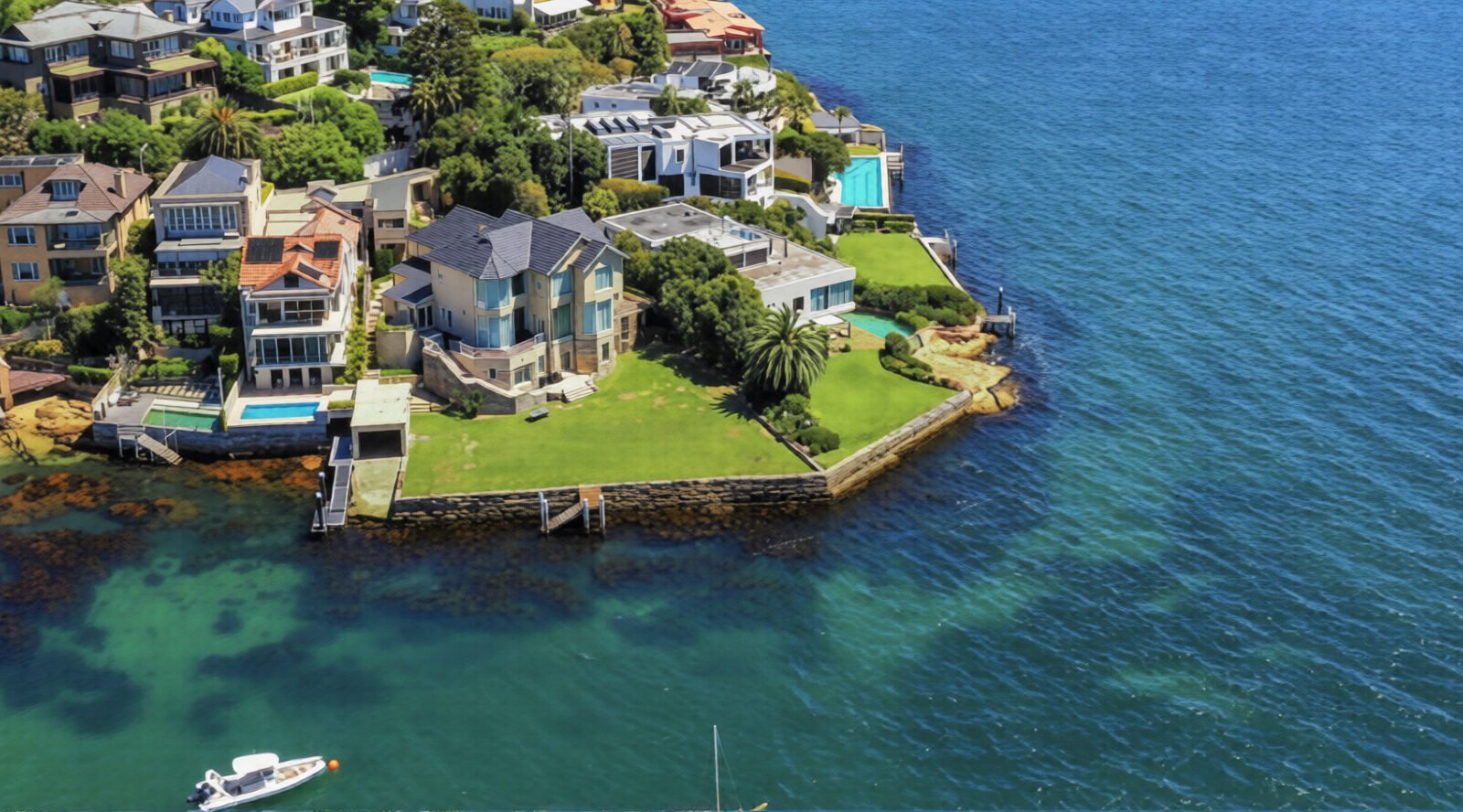
There is a peninsula jutting into Sydney Harbour where the water turns an impossible shade of turquoise, where the Sydney Harbour Bridge frames itself perfectly between heritage-listed gardens, and where a single residential sale can reset an entire nation’s understanding of wealth. This is Point Piper, a suburb so small it contains just eleven streets, yet so valuable that its median house price sits comfortably in the eight-figure range. Located just six kilometers east of the Sydney CBD, within the Municipality of Woollahra, Point Piper is not merely Australia’s most expensive neighbourhood — it is one of the most exclusive residential enclaves on Earth.
To understand Point Piper is to understand the architecture of Australian power. It is where colonial merchants built their sandstone legacies, where media dynasties held court for generations, and where tech billionaires now pay nine-figure sums for the privilege of a harbour breeze. It is a place where land is measured not in square metres but in centuries of accumulated prestige, and where the view from your bedroom window might include the Sydney Opera House, the Harbour Bridge, and the glittering spine of the central business district, all arranged like a diorama designed specifically for your morning coffee.
The Geography of Exclusivity
Point Piper occupies a geographically privileged position that explains much of its astronomical value. Wrapped on three sides by the waters of Sydney Harbour, the suburb sits on a narrow peninsula that offers some of the most coveted waterfront frontage in the country. To the north, the harbour opens toward the bridge and the CBD; to the south, the waters lead toward Rose Bay and the open Pacific beyond. The result is a rare combination of protected, deep-water anchorage and panoramic views that shift from sunrise gold to sunset rose.
The suburb’s physical dimensions are almost comically small. With just eleven streets winding across its peninsula, Point Piper covers a land area of 0.4 square kilometres. Yet within this compact footprint sit some of the largest private landholdings in metropolitan Sydney. Estates such as Elaine, Fairwater, and Uig Lodge occupy individual parcels measured in thousands of square metres — a scale of private land ownership that has simply vanished from every other harbourfront suburb in the city. Where Double Bay and Darling Point long ago subdivided their grand gardens into apartment blocks and townhouses, Point Piper’s estates remain intact, passed between dynasties like heirloom jewellery.
The Municipality of Woollahra, which governs Point Piper, has maintained strict planning controls that effectively freeze the suburb’s low-density character. There are no high-rise towers here, no commercial strips, no through-traffic arteries. The streets are narrow, tree-canopied, and deliberately quiet. The absence of shops, pubs, or even a local café is not an oversight but a feature — Point Piper is designed to be experienced from within, behind sandstone walls and automated gates, not wandered through by the curious public.
A History Written in Sandstone and Money
Point Piper’s story begins in the early nineteenth century, when the land was granted to military and merchant figures who recognised the strategic value of a harbour peninsula. The suburb takes its name from Captain John Piper, a Scottish-born military officer who arrived in the colony in 1792 and was granted the land in 1816. Piper built a grand residence, Henrietta Villa, on the point, establishing a template of harbourside opulence that would define the area for the next two centuries.
By the late 1800s, Point Piper had become the address of choice for Sydney’s emerging commercial aristocracy. The Fairfax family, whose newspaper empire would shape Australian media for generations, acquired not one but two neighbouring estates — Elaine in 1891 and Fairwater shortly after. These properties, sitting side by side on the suburb’s most prized waterfront, formed a dynastic compound that symbolised the intersection of old money, media influence, and political power. For over 125 years, the Fairfax name was synonymous with Point Piper itself, and the family’s decision to finally sell these estates in the 2010s marked the end of an era.
The transition from media dynasty to tech wealth has been the defining narrative of Point Piper’s recent history. When Scott Farquhar, co-founder of Atlassian, purchased Elaine for approximately $71 million in 2017. A year later, his business partner Mike Cannon-Brookes acquired the neighbouring Fairwater estate for a reported $100 million, resetting the Australian record for residential property. The two men, who had met as students at the University of New South Wales and built a software company worth tens of billions, had effectively replicated the Fairfax dynasty’s harbourside compound — only this time, the fortune was written in code rather than newsprint.
The Mathematics of Scarcity
What makes Point Piper so astronomically expensive is not merely the views or the architecture, but a brutal equation of supply and demand that has no equivalent elsewhere in Australia. There are, at any given time, perhaps a dozen properties in Point Piper that could be considered true waterfront estates. Many of these have remained within the same families for multiple generations, passed down through trusts and inheritances rather than ever touching the open market. When one does become available — as Elaine did in 2017, or as Fairwater did in 2018 — the result is not a sale but an event, a resetting of the nation’s entire property compass.
The suburb’s median house price, according to CoreLogic data, sits in the range of $17 million, though this figure is almost meaningless given the vast gulf between a renovated 1960s home on a battleaxe block and a harbourfront estate with private beach access. The true market operates in a realm beyond medians. In 2024, Scott Farquhar sold Elaine for $130 million — a figure that represented not just a profit of nearly $60 million on his 2017 purchase, but a new ceiling for what Australian residential property could command. The buyer, an investment consortium led by Acce Investments CEO Patrick Shi, paid a price that would purchase a small island in other global markets — and did so for a property that had, by some accounts, deteriorated significantly during its tech-billionaire ownership, with asbestos issues and half-demolished interiors.
This is the paradox of Point Piper: the land is so valuable that the structure upon it often becomes irrelevant. A $130 million estate can be purchased with the full intention of demolition, because what is being bought is not a house but a position — a coordinate on the harbour where no new coordinates can ever be created. As one real estate figure noted when marketing Fairwater, money can buy construction, marble kitchens, and infinity pools anywhere in the world. But it cannot buy a 7,000-square-metre parcel of Sydney Harbour frontage, because such parcels no longer exist outside the gates of Point Piper.
The Architecture of Power
The estates of Point Piper represent a cross-section of Australian architectural history, from colonial mansions to contemporary masterpieces. Fairwater, built in the 1880s, is a sprawling Victorian mansion with Italianate detailing, set amid gardens designed by some of the country’s most celebrated landscape architects. Elaine, constructed in 1863, reflected the grandeur of its era with ballrooms, stables, and a private tennis court. Uig Lodge, built in the early 1900s in the style of a Scottish baronial castle, sits at the highest point of the peninsula and offers what is widely regarded as the finest vantage over the harbour available anywhere in Sydney.
Yet for all their heritage value, these estates are also sites of constant architectural tension. Point Piper’s strict planning controls and heritage listings mean that any alteration to a significant property becomes a battle of wills between owners, neighbours, and council. When Farquhar proposed a $37 million renovation of Elaine in 2020 — a radical redesign featuring a curved translucent façade, rooftop tennis court, and basement gym — the plans were ultimately withdrawn following objections from the neighbouring Cannon-Brookes family at Fairwater. In a suburb where the distance between estates is measured in metres rather than streets, the politics of sightlines, privacy, and heritage preservation become intensely personal.
The result is that many Point Piper estates exist in a state of suspended animation. Properties worth nine figures sit behind overgrown hedges, their interiors frozen in the 1980s, their owners paralysed by the complexity of securing approval for change. The land appreciates so rapidly that the house itself becomes an afterthought — a depreciating structure on an appreciating asset of almost geological permanence.
Life Behind the Gates
For the approximately 1,500 residents who call Point Piper home, the suburb offers a lifestyle that is simultaneously spectacular and deliberately invisible. There are no restaurants to review, no boutiques to browse, no street life to observe. The social life of Point Piper happens behind walls — in harbourfront gardens, in private boats moored to personal jetties, in the discreet transfer of invitations from one estate to another.
The suburb’s eleven streets — names like Wolseley Road, Wentworth Street, and Wunulla Road — form a private circuit that locals know by heart and outsiders rarely penetrate. Wolseley Road, in particular, has achieved a kind of mythic status in global real estate circles, regularly cited as one of the most expensive streets in the world. A single waterfront address on Wolseley can command more than the entire annual GDP of a small nation.
Yet Point Piper is not ostentatious in the manner of Beverly Hills or Monaco. There are no tour buses, no paparazzi staking out restaurant entrances, no golden gates screaming wealth. The suburb’s power lies in its restraint — in the quiet closing of automatic gates, in the muffled sound of harbour water against private seawalls, in the understanding that the most valuable real estate is that which requires no advertisement.
The Future of a Fortress
As Sydney’s property market continues its inexorable rise, Point Piper finds itself at an inflection point. The generational transfer of estates from old-money families to tech billionaires is largely complete. The next wave of buyers — private equity principals, Asian conglomerate heirs, cryptocurrency fortunes — are already circling, waiting for the next Elaine or Fairwater to come to market. Each sale resets the benchmark higher, making the suburb less a neighbourhood than a financial instrument, a store of value denominated in harbour views and sandstone.
Yet there are limits to this growth. The suburb cannot expand. No new waterfront estates can be created. The eleven streets will remain eleven streets. And as the gap between Australian median wages and Point Piper median prices stretches into the realm of the absurd, the suburb risks becoming not just exclusive but abstract — a theoretical address where money accumulates without labour, where property changes hands between entities rather than people, and where the harbour views, spectacular as they are, look out over a city that increasingly cannot imagine living in such a place.
Point Piper, then, is more than Australia’s most expensive postcode. It is a mirror held up to the nation’s economy, reflecting the concentration of wealth, the transformation of land into speculative asset, and the enduring power of geography in an age of digital disruption. The eleven streets of this tiny peninsula contain multitudes — colonial history, media dynasties, tech fortunes, and the quiet, relentless logic of scarcity. To stand on the deck of a Point Piper estate at dusk, watching the Harbour Bridge light up against the darkening sky, is to stand at the precise coordinate where Australian ambition has always converged. The view has not changed in a century. The price of admission has.