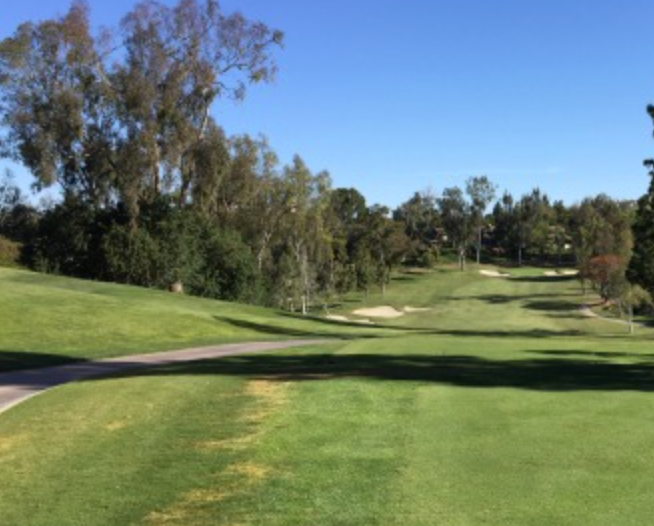
Big Canyon Country Club is a highly exclusive, private, equity-owned golf club located in Newport Beach, California, which opened for play in 1971. Spearheaded by The Irvine Company, the project transformed what had spent decades as cattle grazing pastures—and, before that, served informally as a waste dumping ground for early Newport Beach residents—into a luxury, master-planned residential golf community. The result became, in the words of one local history, a place “home to over 100 corporate presidents,” sculpted with ambitions of matching the prestige of Los Angeles’s premier private clubs of an earlier era.
Early Origins and Development
The Landfill & Pasture Era: Before development, the land had been part of the vast Irvine Ranch since the Irvine Company’s formation in 1894, serving as grazing land for cattle. Early in Newport Beach’s growth, residents took their waste to the canyon as well, and the site was reportedly considered at one point as a formal landfill location before its fortunes changed entirely.
The Master Plan: The Irvine Company selected a group of developers—including Richard B. Smith, McLain Development, Deane Development Company, and Broadmoor Homes—to blend apartments, condominiums, and single-family homes into a country-club-anchored community. Streets were named for world-famous golf courses, and custom homesites ringed the golf course with views of individual holes and fairways. The development came together quickly once construction began: broker Marion Buie, an early pioneer of the project, moved into his new home on September 1, 1971, amid tractors, noise, and temporary electrical hookups—a vivid marker of just how fast the transformation from barren canyon to functioning neighborhood happened.
The Grand Opening: The golf course opened for member play in 1971, with the clubhouse following roughly a year later, in 1972. (Some accounts of the club’s history cite more precise dates for these milestones—a May 1971 course opening, a June 1971 formal grand opening, and an April 1972 clubhouse debut—though these exact dates couldn’t be independently corroborated here and should be treated as reported rather than fully confirmed.) Early pricing reflected the era: Broadmoor homes sold in the $71,000 to $81,500 range, custom homesites started at $120,000, and Deane’s condominiums were marketed from $65,000 to $80,000—figures that look almost unrecognizable next to the multimillion-dollar homes that line the same fairways today.
Golf Course Evolution and Architecture
The 18-hole, par-72 championship course has seen multiple architectural updates over its 50-plus year history to keep it challenging and modern:
Robert Muir Graves (1971): The original architect, a past president of the American Society of Golf Course Architects, sculpted the layout to curve through the natural canyon valley, incorporating water hazards and hilly terrain that remain defining features of the course today.
John Harbottle III (1998): A designer known for his work under the mentorship of Pete Dye, Harbottle led a significant renovation that modernized the layout and updated its strategic bunkering.
Turf Center (2019): The club opened a new 19,000-square-foot turf maintenance facility in 2019, part of its ongoing infrastructure investment—though the specific claim that golf architects Jackson Kahn Design led a course redesign that same year could not be independently verified.
Andrew Green Restoration (2025–2026): Celebrated restoration specialist Andrew Green was hired to lead a master-plan renovation of the course, focused on modernizing irrigation, correcting drainage, and updating conditioning. The project, filed with the City of Newport Beach in April 2025 and begun that August, is expected to be complete in fall 2026.
Historic Tournaments and Milestones
Big Canyon has built a genuine competitive pedigree over its history, hosting numerous state, regional, and national championships:
Tiger Woods’ Historic Round (1996): While playing for Stanford in the Pac-10 Men’s Golf Championship, Tiger Woods shot a course-record 61 at Big Canyon in the morning round—then broke his own record again that afternoon with a 65, en route to an 18-under-par total and a 14-stroke victory. Teammates recalled the atmosphere as feeling “like a Tour event with all of the roars.” Woods was competing there as a visiting collegiate golfer, not as any kind of club member—no source supports the idea that he held honorary membership at Big Canyon.
USGA Tournaments: The club hosted the U.S. Women’s Mid-Amateur Championship in 2000 and was awarded the U.S. Senior Amateur Championship in 2014.
California Amateur (2022): Big Canyon hosted the California Amateur Championship, one of the country’s oldest state amateur championships, from June 27 to July 1, 2022, with Charlie Reiter emerging as champion.
Facilities and Prestige
The original clubhouse was demolished in 2006 and entirely reconstructed by Snyder Langston, reopening in 2009 as a two-story, 70,000-plus-square-foot facility. The complex features fine and casual dining venues, a signature wine program overseen by a Master Sommelier, a substantial fitness center, and wellness and aquatics spaces—part of a broader pattern of continuous reinvestment that has defined the club since its earliest years, from the 1998 course renovation through the 2019 turf center and now the current Andrew Green-led restoration.
That willingness to keep reinvesting, generation after generation, is arguably the real throughline of Big Canyon’s history. What started in 1971 as a speculative bet on transforming a barren, landfill-adjacent canyon into a golf community anchored by “100 corporate presidents” has become, over five-plus decades, a club capable of hosting USGA championships, producing one of the most famous rounds in college golf history, and rebuilding both its course and clubhouse from the ground up more than once—all while remaining, at its core, the same member-owned institution the Irvine Company and its original developers set out to build over half a century ago.
From Barren Canyon to Blue-Chip Neighborhood
It’s worth pausing on just how unpromising the underlying land was before any of this began. A canyon carved by the Upper Newport Bay watershed, used for generations as pasture and, informally, as a place to haul unwanted refuse, is about as unglamorous a starting point as a luxury real estate project can have. The Irvine Company’s decision to build something entirely disconnected from Newport Beach’s ocean-and-harbor identity—a golf-and-canyon community with, as one local history put it, “nothing ocean or water related”—was itself a departure from how the rest of the city had developed. It succeeded anyway, in part because the site’s inland location and dramatic elevation changes turned out to be assets once shaped by a golf course architect rather than liabilities to be built around.
The pace of that early build-out is striking in hindsight. Within a single year of ground being broken, homes were selling, families were moving in amid active construction, and a golf course capable of hosting a signature Robert Muir Graves design was already open for member play. That speed reflected both the Irvine Company’s development machine—by the early 1970s, one of the most experienced master-planned community builders in the country—and genuine market appetite for exactly the kind of inland, golf-oriented lifestyle product Big Canyon represented, as an alternative to the more traditional waterfront communities Newport Beach was already known for.
Decades later, that same appetite shows up in how the club has kept investing in itself rather than resting on its original design. The 1998 Harbottle renovation came at a moment when many golden-age Southern California courses were being modernized to keep pace with changing equipment and playing styles. The 2006–2009 clubhouse rebuild came as private clubs nationally were reinvesting heavily in amenities beyond golf—dining, wellness, event space—to keep multi-generational memberships engaged. And the current Andrew Green-led restoration, still underway as of this writing, suggests the club’s board sees continued reinvestment, rather than simple maintenance, as the price of staying relevant for another fifty years.
Few private clubs anywhere can claim quite this arc: from cattle pasture and informal dump site, to a speculative 1970s master-planned community, to a course that hosted one of the most legendary rounds in the history of college golf, to a club now in the midst of yet another significant reinvention. That’s the real transformative story at Big Canyon—not any single fact or date, but a five-decade pattern of a club and its surrounding neighborhood consistently choosing to remake themselves rather than simply age in place.