Miele vacuum cleaners built their reputation on sealed HEPA filtration. Here’s the history of the line, how the technology works, and its real trade-offs.
Ask an American or British shopper what Miele makes, and the answer is often a vacuum cleaner before it’s a washing machine — even though vacuums are a relatively late addition to a company that spent its first three decades making farm equipment and laundry machinery. Miele introduced its first vacuum cleaner, the Melior, in 1927, nearly thirty years after the company’s founding. That the vacuum line went on to become Miele’s most internationally recognizable product, particularly in markets where the company’s dishwashers and washing machines compete against much larger local incumbents, says as much about allergy-conscious marketing in the 1990s and 2000s as it does about the vacuums themselves.
From the Melior to the Modern Canister
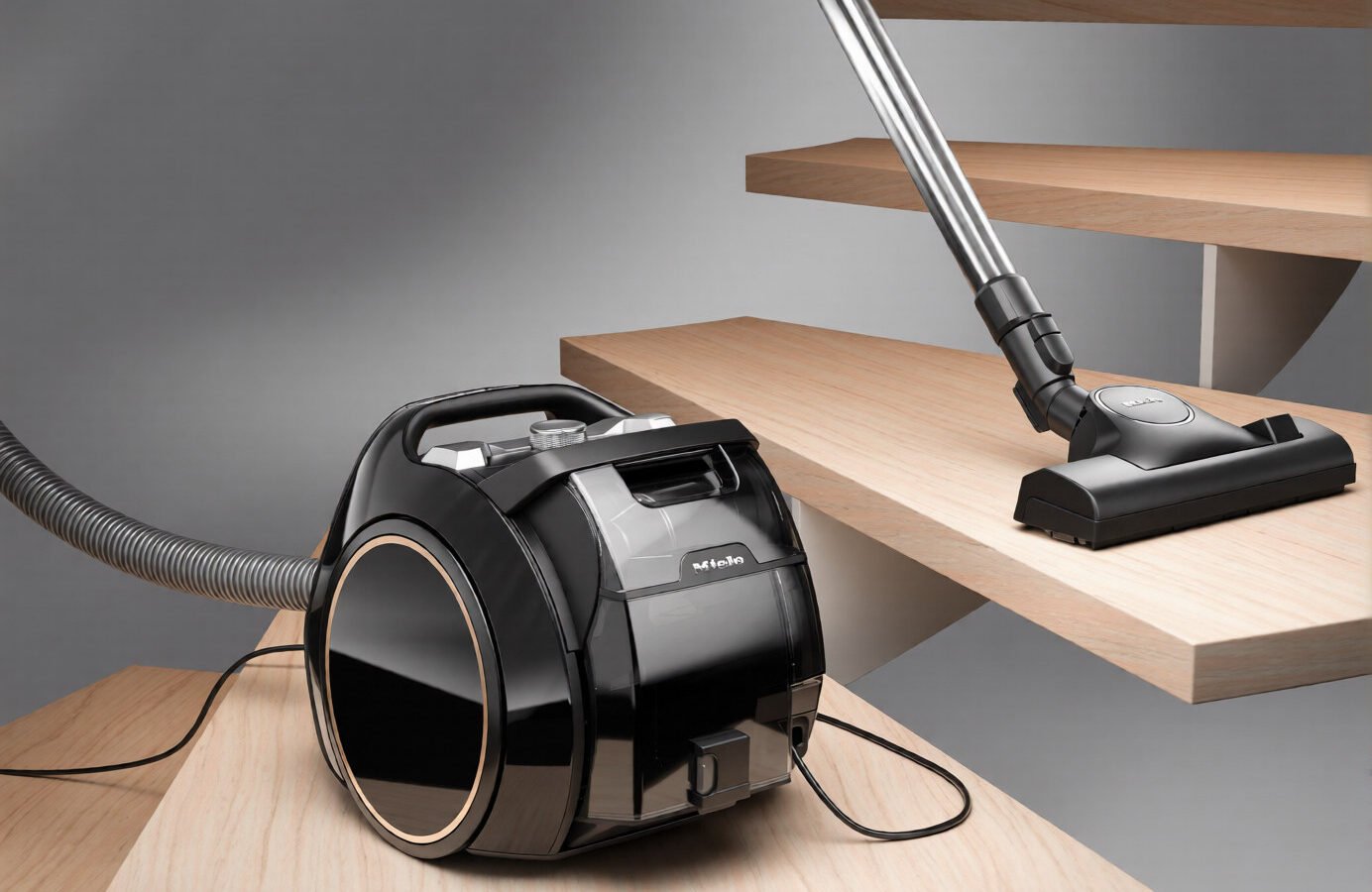
Miele’s early vacuum cleaners followed a design path common to the era — the company’s first model in a distinctive elongated shape, introduced decades after the Melior, was described internally as looking like a torpedo, a silhouette that in modified form persists in canister vacuums generally. Canister design itself is the more consequential decision: separating the motor and dust collection unit from the floorhead via a hose, rather than combining them into a single upright body, trades some maneuverability on stairs for lower weight at the point of contact and, generally, quieter operation, since the motor sits farther from the user’s ears.
Miele has stayed with canister form factors as its flagship line even as much of the American vacuum market shifted toward uprights and, more recently, cordless stick vacuums. That’s a deliberate positioning choice rather than an oversight — Miele does sell other formats, but the canister line, currently sold under the Miele Complete C3 name (previously badged S8), remains the company’s premium tier and the model line most associated with the brand internationally.
What ‘Sealed HEPA System’ Actually Means
The technical claim underpinning Miele’s reputation among allergy sufferers is specific enough to be worth unpacking rather than taking on faith. Most Miele Complete C3 models use what Miele calls the AirClean System: an 11-stage filtration path built around a certified HEPA filter, most commonly rated H13, which independent standards classify as capable of capturing at least 99.95% of particles at the most penetrating particle size (around 0.1 to 0.3 microns, depending on the testing standard cited). The word doing the real work here isn’t “HEPA” — plenty of vacuums on the market use HEPA-rated filters — it’s “sealed.”
A Miele HEPA vacuum with a sealed system means the engineering ensures that all the air passing through the machine is actually forced through the filter, rather than leaking out through gaps in the housing or bag compartment before it reaches the filtration stage. A vacuum with a HEPA filter but an unsealed housing can still recirculate unfiltered air into the room, which defeats much of the point for a genuinely allergy-sensitive household.
Miele’s dustbags reinforce the same design goal: the company’s AirClean bags are self-sealing, closing automatically when removed so that the collected dust and allergens don’t escape during bag changes — a detail that matters specifically to the demographic the product is aimed at, and less so to a buyer who just wants clean floors.
The Model Tiers, and Where the Real Differences Are
Miele vacuum cleaners are organized in three broad tiers within the canister lineup. The Classic C1 series is the entry point: a simpler feature set, generally without a standard HEPA filter (it’s available on some models as an upgrade), built around the same core suction motor as the higher tiers. The Compact C2 series sits in the middle, smaller and lighter, with HEPA filtration offered as an option rather than standard equipment.
The Miele Complete C3 series is the premium tier and the one most often reviewed and recommended: HEPA filtration and the full 11-stage AirClean System come standard, along with a longer cord for a roughly 36-foot cleaning radius, foot-pedal suction controls, and a lighter “skeleton” construction that Miele introduced to shave weight relative to the previous S5 generation.
Within the C3 tier, most of the differentiation between individual models is about the floorhead and accessories bundled in — an Electrobrush powerhead for carpet, a Parquet Twister for hardwood, or a Cat & Dog variant with an active-carbon filter layer aimed at pet odor — rather than differences in the core filtration or motor technology. That’s worth knowing before paying a premium for a specific bundle: the filtration performance that drives most buying decisions is largely consistent across the C3 line.
The Trade-Offs Reviewers Tend to Undersell
Any honest Miele vacuum cleaner review has to include what the format costs a buyer. Miele canister vacuum models are less convenient than uprights for stairs, since the canister body has to be carried or dragged rather than simply pushed. Miele’s bagged design, standard across the C3 line, is itself a trade-off: bags cost money on an ongoing basis and need periodic replacement, unlike the bagless designs that dominate much of the mid-market, though bagged systems do generally maintain more consistent suction as the bag fills and tend to trap allergens more effectively at the point of collection rather than releasing a cloud of dust when emptied.
Price is the other honest trade-off. Miele Complete C3 models typically cost several times what a mid-market bagless upright costs, and the ongoing cost of genuine Miele filter bags and replacement HEPA filters adds a real, recurring expense that a buyer comparing sticker prices alone will miss. Whether that premium is justified depends heavily on why someone is buying a vacuum in the first place — a household managing genuine dust or pet allergies has a much more direct case for the sealed HEPA system than a household that simply wants clean-looking floors, where the filtration advantage matters far less.
How the Vacuum Business Fits Inside Miele’s Broader Company
It’s worth being clear-eyed about scale here: despite the brand recognition, vacuum cleaners are not Miele’s largest product category by revenue or manufacturing volume. The company’s Bielefeld plant, which produces both vacuum cleaners and dishwashers, turns out roughly two million units a year combined across both categories — a substantial number, but one that sits behind the roughly 850,000 washing machines produced annually at the original Gütersloh factory alone. Miele’s own corporate messaging still centers on laundry and dishwashing as the company’s historical core business; the vacuum line’s outsized reputation is more a function of how it was marketed and reviewed in English-language media over the past two decades than of its share of the company’s actual output.
That distinction matters for anyone trying to understand what Miele actually is as a company, rather than what it’s best known for in a given market. In Germany, Miele is primarily a laundry and kitchen appliance brand with a strong but secondary floor-care line. In the U.S. and U.K., for many consumers, the reverse is closer to true — the vacuum is the entry point, and the rest of the catalog is a discovery made afterward.