listen to the article
The approach sets the tone. Three miles south of Palm Desert’s El Paseo district, the road climbs the old Palms to Pines Highway through sun-baked canyon walls before the guard gate appears at the foot of the Santa Rosa Mountains, roughly 1,000 feet above the valley floor. The club takes its name from the desert bighorn sheep that still climb the slopes behind the first tee of the Mountains Course — locals say it’s not uncommon to spot a herd grazing unbothered as members tee off.
The Courses: Two Philosophies, One Mountain
Bighorn was founded in the early 1990s on a simple idea — that privacy and world-class golf should coexist — and it built that idea around two 18s with sharply different personalities.
The Mountains Course (Arthur Hills, opened 1991) came first. Hills threaded the layout through ridges and elevation changes, crafting a routing defined by expansive desert vistas and dramatic vertical movement. Golf Digest has ranked it among California’s best, most recently 29th in the state for 2025–26.
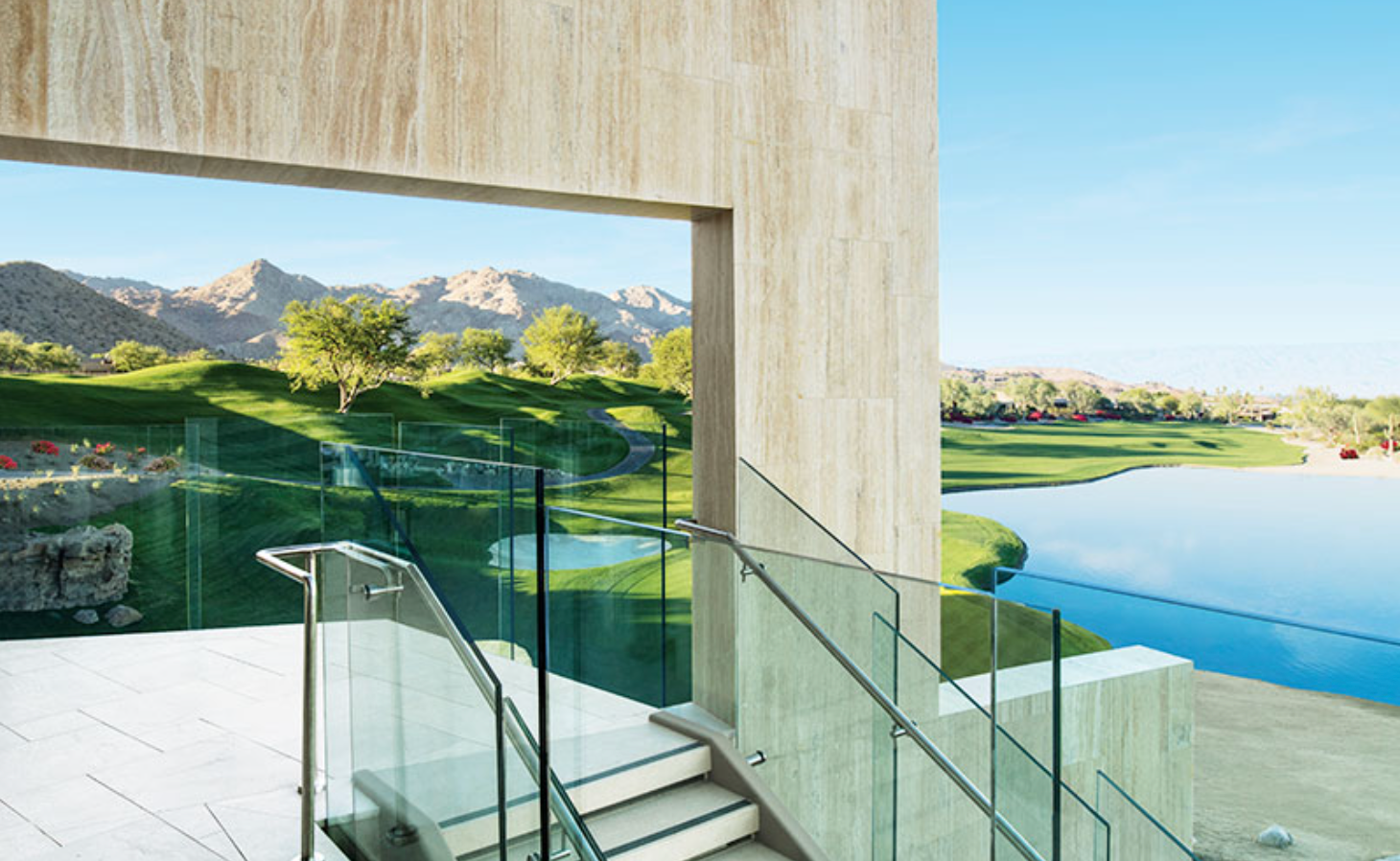
The Canyons Course (Tom Fazio, opened December 1998) arrived seven years later and made the club famous. The specs read classic Fazio: 7,000 yards from the tips, slope 141, wide fairways, generous greens, and prominent bunkering throughout — but the signature is water. Fazio wove waterfalls and oasis-like features into a desert landscape, giving the course a surreal lushness against the rock. Golf Digest‘s raters have kept it in the state’s top 30 for two decades with panelists consistently praising its conditioning, aesthetics, and design variety.
One design detail members treasure most has nothing to do with architecture: there are no tee times. Players check in with the starter and go — a pace of play the club calls pure and rare in modern golf.
The Tournament Stories
Bighorn’s fairways have carried an outsized share of televised golf history. The club’s own roster of events reads like a late-1990s/early-2000s greatest-hits reel: The Skins Game, the U.S. Senior Match Play Challenge, the Battles at Bighorn, and the LPGA’s Samsung World Championships were all staged here. The legends who walked them form an honor roll — Palmer, Nicklaus, Payne Stewart, Woods, Trevino, Sorenstam, and Pak.
The competitive legacy continues quietly today: the club sponsors Jon Rahm — the 2017 European Tour Rookie of the Year and multiple winner that season — and William McGirt, whose 2016 Memorial Tournament bunker shot on Muirfield’s 18th earned a rave from Jack Nicklaus himself.
The Clubhouse That Cost More Than the Courses
In early 2018, Bighorn completed a new 80,000-square-foot clubhouse at a reported $70 million — a figure that reset expectations for what a private club facility could be. The building, positioned at the same elevation with views over the Mountains Course 18th green, a lake and a waterfall, houses nine indoor-outdoor dining venues — The Pour House, Canyons Steak House, The Hub, and Marketplace among them — plus a glass-oval golf shop, card rooms, and event spaces. A quirk no rival can match: four penthouse residences integrated directly into the clubhouse, with full concierge service.
The amenity list extends to The Vault — a 24,000-square-foot climate-controlled collector car gallery with its own Redline Lounge and racing simulators — a spa with whole-body cryotherapy, a junior-Olympic pool, tennis and pickleball, and chauffeured car service with private-jet coordination.
What It Costs
Bighorn’s exclusivity has a published arithmetic, and it starts with a rule: membership is offered only to property owners in the community, structured as non-equity, non-transferable licenses.
For the social Club Membership, posted initiation fees run between $100,000 and $200,000, with annual dues in the neighborhood of $24,000 to $29,000. Full Golf Membership begins at $250,000 to $300,000 for a single membership, rising to $350,000 for dual, with annual dues of roughly $39,500.
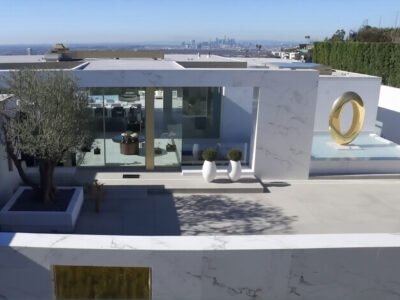
The club and the real estate are separate decisions. Real estate ranges from $1.4 million villas to vacant lots in the $1–4 million range, up to custom estates in the tens of millions, including architectural statements like the Guy Dreier-designed 706 Summit Cove. The club’s institutional validation: a 10-time GRAA Top Private Facility honoree and a two-decade fixture on Golf Digest‘s California rankings.
Desert golf clubs are easy to find. What’s rare is finding three decades of vision in one place — an Arthur Hills original, a Fazio masterpiece, evenings of Skins Game history, and a clubhouse that cost more than most courses ever will. The sheep on the hillside, members say, seem to agree.