listen to the audio of this article:
When WhatsApp co-founder Jan Koum bought Château de la Garoupe on Cap d’Antibes in late 2023, the price tag alone made headlines — roughly €65 million, or about $70 million. But the number is almost the least interesting part of the story. The château carries nearly 120 years of European high-society history, a Russian oligarch’s dramatic downfall, and a French state seizure along the way, all wrapped into one of the most storied addresses on the French Riviera.
The Deal
Koum purchased the estate in November 2023, with the transaction finalized around December of that year, for approximately €65 million, the property reportedlyvalued as €158 millionn according to French regional newspaper Nice-Matin, which broke the story. The sale was handled not by a typical luxury broker, but by Agrasc, the French government agency. It ranked among the largest transactions in the agency’s history since its founding in 2010.
An Oligarch’s Rise and Fall
Its previous owner: Boris Berezovsky, the Russian oligarch and one-time Kremlin power broker who later became one of Vladimir Putin’s most vocal critics from exile in the United Kingdom. Berezovsky purchased the estate in 1999 for roughly €22 to 24 million, at a time when he was among the wealthiest and most politically influential men in Russia. Berezovsky died by suicide in England in 2013, and in 2015 French authorities seized Château de la Garoupe in connection with a money-laundering investigation. The property then sat under French state management for roughly a decade — until Koum’s purchase finally gave it a new owner.
A House Built for a British Baron
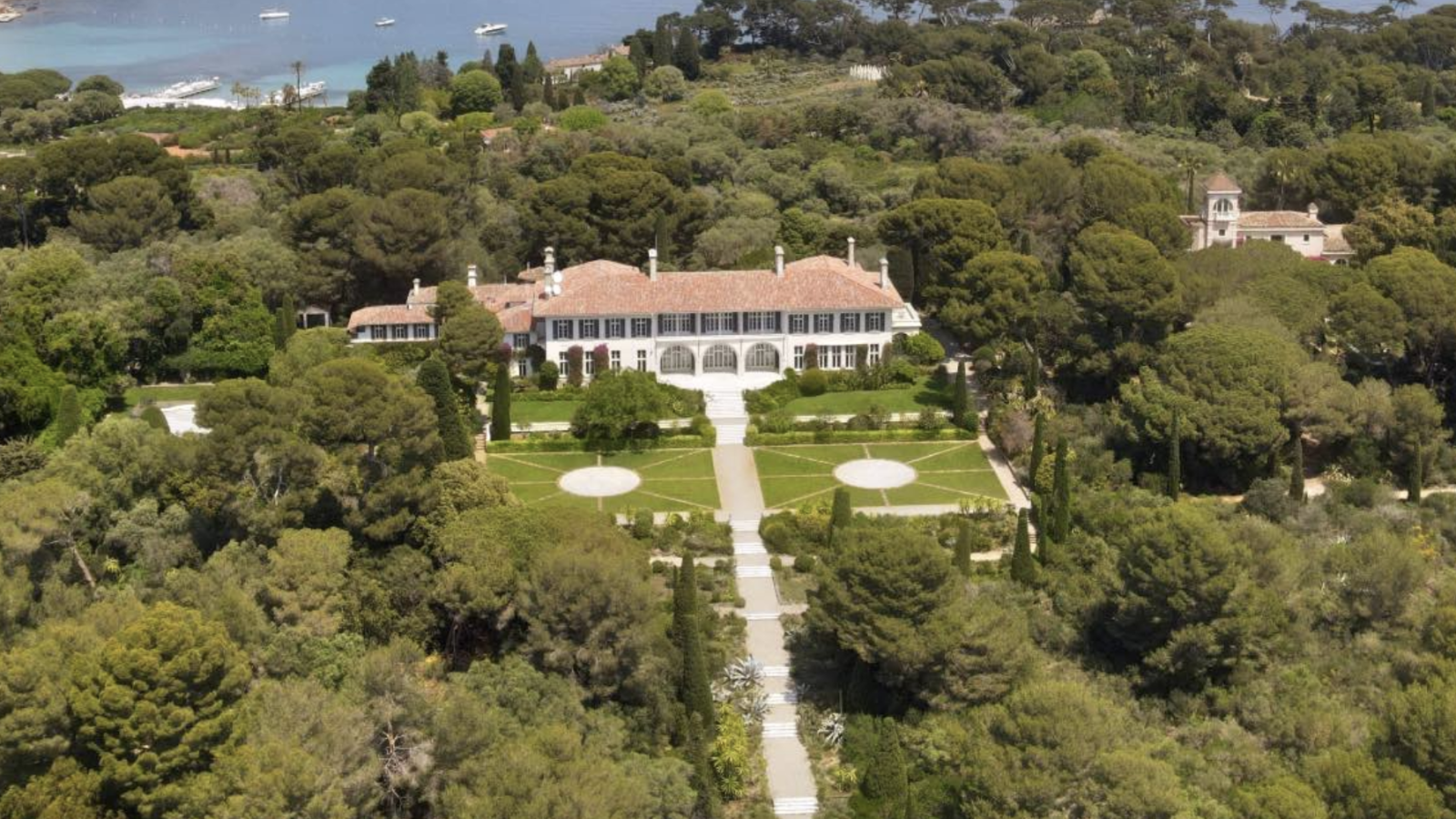
Long before oligarchs and tech billionaires entered the picture, Château de la Garoupe was built for old European aristocracy. In 1907, British Member of Parliament Charles McLaren, 1st Baron Aberconway, purchased roughly four acres at the very point of Cap d’Antibes and commissioned English architect Ernest George to design the estate. George gave the house a long façade punctuated by distinctive crescent, or half-moon, windows, along with a dramatic staircase descending from the property down toward the sea — a design element still cited today as one of the château’s most recognizable features.
The estate expanded over the following decades under subsequent owners. Sir Henry Norman, who later owned the property along with his wife, added an extra story to the house, further increasing its scale. By the time of Koum’s purchase, the château and its grounds had grown to roughly 10 hectares — about 20 acres — of landscaped parkland, with the main residence itself measuring somewhere between 1,300 and 1,500 square meters, or approximately 14,000 square feet.
The grounds reflect over a century of careful cultivation. Lady Aberconway personally directed the planting of the gardens, which came to feature rose bushes, irises, and begonias. Today the property also includes five separate outbuildings, a swimming pool, and a tennis court, along with the main house’s standout interior spaces: a formal drawing room, a music room, and a billiards room.
A Guest List Few Estates Can Match
Part of what makes Château de la Garoupe such a coveted address isn’t just its architecture or its acreage, but its guest list. American composer Cole Porter rented the property in 1922, at the height of the Roaring Twenties, when Cap d’Antibes was becoming an emerging playground for artists and the transatlantic elite. Pablo Picasso and Ernest Hemingway are also both associated with the estate, part of a broader pattern of early-twentieth-century cultural figures who were drawn to this stretch of the French coastline.
That pedigree places the château in rare company even among Riviera estates, most of which can claim wealthy owners but far fewer can claim this specific overlap of literary, artistic, and aristocratic history in one address.
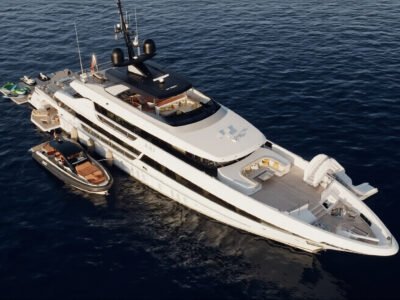
The purchase fits into a broader pattern in Koum’s post-WhatsApp life. Around the same period as the château acquisition, reports noted that his superyacht, Moonrise, spent much of the preceding summer cruising the Côte d’Azur — suggesting the purchase reflected an intention to establish a more permanent Riviera base, rather than a one-off trophy acquisition. It also mirrors a broader wave of American buyers moving into the French Riviera’s ultra-luxury market in recent years, drawn by a combination of a relatively favorable currency exchange rate and a real estate market that, by the standards of the world’s most exclusive coastal enclaves, had settled toward the lower end of its historical price range. Villa La Mandala in Saint-Tropez, previously owned by French businessman Bernard Tapie, sold at auction in 2022 for €81.2 million to an American investor reported to be Tony Tamer, co-founder of H.I.G. Capital — part of the same trend that would eventually bring Koum to Cap d’Antibes.
Koum’s own biography makes the purchase feel especially striking by contrast. Born in Kyiv, Ukraine, he emigrated to the United States with his mother at age 16, settling in Mountain View, California. His family relied on food stamps in their early years in the US. He would go on to work at Yahoo before co-founding WhatsApp in 2009 with Brian Acton, eventually selling the messaging app to Facebook in 2014 in a deal valued at roughly $19 billion. Owning one of the Riviera’s most historically significant estates represents about as complete a full-circle arc as modern tech wealth produces.
Despite the scale of the purchase, Koum has kept an unusually low public profile around the acquisition — consistent with his general reputation as a private figure even during his years running one of the world’s most widely used communication platforms. The château itself remains closed to the public, though visitors walking the coastal path around Cap d’Antibes, known as the Sentier Tirepoil, can still glimpse the estate’s long staircase rising from the sea toward the property above.