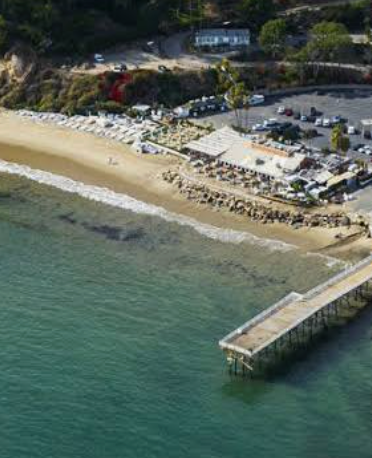
Along a narrow, gated stretch of bluff overlooking the Pacific Ocean sits Paradise Cove, one of the most quietly extraordinary real estate markets in the United States. To an outsider, it might look like just another pretty patch of California coastline. But within it, the handful of private estates that ring the community have changed hands for tens of millions — even, in some cases, over a hundred million dollars. Understanding why requires looking past the price tags themselves and into the specific, overlapping forces that make this small enclave so unusual, even by Malibu standards.
Scarcity Is the Foundation
Every explanation of Malibu real estate eventually comes back to the same basic fact: there is only so much coastline, and no one is making more of it. Demand for oceanfront property in Southern California has remained persistently high for decades, while the supply of land along the coast is fixed. That imbalance alone would be enough to keep prices elevated across Malibu generally, but Paradise Cove intensifies the effect. It is a small, defined, gated community — not a sprawling district where new development can gradually expand supply. When land rarely becomes available and demand is essentially limitless among the world’s wealthiest buyers, prices climb well past what conventional market logic would predict.
This scarcity shows up in the way property actually changes hands in the area. Sales are frequently completed off-market, arranged quietly between sellers, buyers, and brokers before a property is ever formally listed. That practice further restricts the visible supply, reinforcing the sense that opportunities to acquire land in the cove are rare events rather than routine listings.
Direct Ocean Access and Unobstructed Views
Not all coastal property is created equal, and the distinction between “near the beach” and “directly on the beach with private access” makes an enormous difference in price. Properties with true oceanfront positioning and private beach access represent some of the most valuable real estate anywhere in California, with prices in the most extreme cases climbing past $100 million. Paradise Cove sits squarely in that category. Homes and estates in the community offer direct beach access along with sweeping, largely unobstructed views of the ocean and nearby Point Dume, all from an elevated bluff position that maximizes the visual impact of the coastline below.
That combination — direct access plus dramatic, permanent views — is difficult to replicate anywhere else. Neighboring communities may offer one or the other, but rarely both together with the same degree of privacy.
Privacy and Gating
Money alone doesn’t fully explain Paradise Cove’s appeal; a significant part of what buyers are paying for is control over their own environment. The community is gated and private, with golf-cart-friendly internal streets and low outside foot traffic. For high-net-worth buyers and celebrities, this kind of physical seclusion is not a minor amenity — it is often the deciding factor in where they choose to live. The ability to control who enters the community, to avoid public roads running past a front gate, and to maintain genuine separation from paparazzi, tourists, or simply curious onlookers carries real value that gets priced directly into the land.
This is part of why the community has attracted a particular type of buyer over the years: people whose wealth or public profile makes ordinary neighborhoods impractical. Gated privacy at this level is rare even within Malibu, and rarer still when paired with direct beachfront access.
Why the Ultra-Wealthy Are Drawn Here
Paradise Cove’s reputation didn’t emerge overnight. The area has a long, well-documented history as a filming location and cultural touchstone, dating back to mid-century Hollywood. It served as the backdrop for classic beach films and television shows, and its pier and shoreline were the setting for one of the most iconic Hollywood photo shoots of the early 1950s. That cultural pedigree has followed the community ever since, lending it a kind of mythology that few other beach towns can claim.
In more recent decades, that mythology has been reinforced by an ongoing concentration of billionaires and other ultra-wealthy residents. Tech founders, entertainment-industry power players, and Silicon Valley investors have all acquired property in and around the cove, creating a self-reinforcing dynamic: proximity to other high-net-worth neighbors becomes part of the appeal itself. For billionaires in particular, buying in isn’t just purchasing a house — it’s purchasing membership in a small, informal community of peers who value the same combination of privacy, prestige, and exclusivity, and who understand instinctively why that combination is worth paying a premium for.
Land Assembly and the Economics of Compounds
One of the more distinctive patterns in Paradise Cove’s recent history is the rise of the multi-parcel private compound. Rather than purchasing a single finished estate, several wealthy buyers have instead spent years quietly acquiring adjacent lots one at a time, demolishing older structures, and gradually assembling a unified holding across what were once several separate properties.
This approach has an interesting effect on pricing. Each additional adjacent parcel becomes disproportionately more valuable to a buyer who already owns the property next door, because it isn’t just land being purchased — it’s expanded privacy, additional buffer space, and greater control over an entire section of the bluff. A parcel that might be worth a certain amount to an unrelated third party can be worth significantly more to the neighbor assembling a compound, since it eliminates the risk of an unwanted development or an intrusive new neighbor appearing right next to an existing family estate.
This dynamic has helped push individual transactions in the broader Malibu area to some of the highest prices ever recorded for residential real estate in California. The state’s priciest home sale on record involved a large clifftop estate with its own private stretch of oceanfront, a sale that itself surpassed a widely reported $200 million purchase by a prominent celebrity couple the year before, underscoring how far the world’s wealthiest buyers are willing to go for this stretch of coastline. While those particular transactions sit just outside Paradise Cove’s boundaries, they illustrate the ceiling that Malibu’s ultra-luxury market has reached — a ceiling that helps set expectations and comparables for adjacent, similarly desirable communities like Paradise Cove.
Local Experts Push Back on the “Just Hype” Narrative
It’s tempting to assume that prices at this level are driven primarily by perception, branding, or celebrity attention rather than fundamentals. Real estate professionals who work in the Malibu market regularly push back on that idea. Their argument is that Malibu’s premium pricing reflects a specific and largely irreproducible combination of factors — the fixed coastline, the topography that limits new construction, strict local zoning and coastal development regulations, and the sheer difficulty of building anything new along this stretch of the Pacific Coast Highway. In their view, once you account for all of that, the eye-popping numbers start to look less like inflated hype and more like an accurate reflection of genuine, structural scarcity.
Prices Aren’t Static — But the Fundamentals Are Durable
It’s worth noting that Malibu real estate, including areas like Paradise Cove, hasn’t moved in a straight line upward forever. Broader market data shows periods of cooling, including a meaningful pullback in prices over the past couple of years amid higher interest rates and shifting buyer demand. When adjusted for inflation, even the historical price appreciation in Malibu looks more moderate than the raw, nominal figures suggest — strong, but not quite as explosive as headline numbers imply.
Still, the underlying fundamentals that make Paradise Cove valuable haven’t changed: there is no more coastline being created, the community remains gated and private, its cultural cachet continues to draw high-profile buyers, and the practice of assembling adjacent parcels into private compounds keeps removing already-scarce inventory from any future market. Short-term price fluctuations come and go with broader economic conditions, but the structural scarcity driving Paradise Cove’s premium is not something a market downturn is likely to reverse.
The Bottom Line
Paradise Cove’s extraordinary prices are less a single explanation than the sum of several compounding forces: a strictly limited and rarely available supply of land, direct ocean access paired with panoramic views, meaningful privacy behind a private gate, decades of Hollywood-adjacent cultural prestige, and a pattern of wealthy buyers consolidating neighboring parcels into private compounds. None of these factors can be manufactured or expanded at scale, which is precisely why a small, quiet stretch of Malibu coastline has become one of the most valuable residential addresses in the country.