What began in 1963 as a modest racing operation in a small workshop in New Malden, England, has evolved into one of the most revered names in automotive history — a company that has conquered Formula 1, dominated Can-Am, won Le Mans, and built what many consider the greatest road car ever conceived.
The Boy from Auckland
The McLaren story begins not in England, but in Auckland, New Zealand, with a young boy named Bruce McLaren. Bruce’s talent quickly outgrew New Zealand. In 1958, his performance in the New Zealand Grand Prix caught the attention of Jack Brabham, who invited the young Kiwi to join Cooper in Europe. Bruce became the first recipient of the “Driver to Europe” scheme, a program designed to give promising New Zealand drivers international experience. At Cooper, he won the 1959 United States Grand Prix at age 22, becoming the youngest Grand Prix winner in history at that time — a record that stood until Fernando Alonso broke it in 2003.
Building an Empire
By 1963, Bruce had outgrown Cooper. He founded Bruce McLaren Motor Racing Ltd in a small workshop, initially to compete in the Australasian Tasman Series. The team’s first self-designed car, the McLaren M1A, was a sports racer powered by a small-block Oldsmobile engine. Only 24 were produced, but they established a pattern that would define McLaren for decades: innovative engineering, lightweight construction, and an unrelenting pursuit of performance.
The real breakthrough came in Can-Am — the no-holds-barred North American sports car championship that became McLaren’s playground. The M6A of 1967, painted in the now-iconic McLaren Orange, was designed by Robin Herd and powered by a Chevrolet V8. Bruce and teammate Denny Hulme won five of six races that season, and the team would go on to dominate Can-Am for five consecutive years, amassing 43 victories by the time the original series ended in 1974. The money and prestige from Can-Am success funded McLaren’s nascent Formula 1 program, which made its Grand Prix debut at the 1966 Monaco Grand Prix.
The Tragedy and the Legacy
On June 2, 1970, while testing the new M8D Can-Am car at Goodwood, Bruce McLaren was killed instantly when the rear bodywork came loose and his car crashed into a marshal’s post. He was just 32 years old, and had confided to friends that he planned to retire from racing at the end of the season to focus on his growing business. His death threw the company’s future into doubt.
But Bruce’s team was bigger than one man. Teddy Mayer, who had become McLaren’s largest shareholder, took the helm and steered the company through its darkest hour. Under Mayer’s leadership, McLaren won its first Formula 1 Constructors’ Championship in 1974, with Emerson Fittipaldi also delivering the team’s first Drivers’ Championship. The success continued with James Hunt’s dramatic 1976 title, though the late 1970s brought leaner years.
The turning point came in 1981, when McLaren merged with Ron Dennis’s Project 4 Racing Team. Dennis brought designer John Barnard back into the fold, and together they introduced the MP4/1 — the first Formula 1 car to use a carbon-fiber composite monocoque. It was lighter, stiffer, and safer than anything that had come before, and it revolutionized motorsport construction. Between 1984 and 1991, McLaren drivers won seven World Championships, capped by the legendary 1988 season when the MP4/4, driven by Ayrton Senna and Alain Prost, won 15 of 16 races — one of the most dominant seasons in F1 history.
The Road Car Dream
Bruce McLaren had always harbored ambitions beyond the racetrack. In 1969, he developed the M6GT — a road-going version of the M6 Can-Am car intended for homologation. Only three were built before Bruce’s death halted the project, but the M6GT represented the seed of an idea that would germinate for two decades.
In 1985, McLaren Cars was formally established with a singular mission: to build what Ron Dennis described as “the finest sports car the world has ever seen.” The result, unveiled in 1992 after six years of development, was the McLaren F1 — a machine that redefined what a supercar could be. Designed by Gordon Murray, the F1 featured a three-seat, center-steering layout, a carbon-fiber monocoque chassis (the first in a production car), and a BMW-sourced 6.1-liter naturally aspirated V12 producing 627 horsepower. With a top speed of 240.1 mph, it was the world’s fastest production car for over a decade.
But the F1’s legend was cemented not by straight-line speed, but by endurance. In 1995, a racing variant — the F1 GTR — entered the 24 Hours of Le Mans on its competitive debut and won outright, defeating purpose-built prototypes. Four of the top five finishers were F1 GTRs. It remains one of the most improbable victories in motorsport history, achieved by a car that was essentially a lightened road machine.
Only 106 F1s were built between 1993 and 1998, including road cars, GTR race cars, the ultra-rare F1 LM (five built, commemorating the Le Mans victory), and the long-tail F1 GT homologation special. Today, they are among the most valuable automobiles on Earth, with examples regularly commanding eight-figure sums at auction.
The Second Coming
After the F1, McLaren’s road car division went dormant. The company collaborated with Mercedes-Benz on the SLR McLaren from 2003 to 2010, but a true successor to the F1 seemed unlikely. Then, in 2010, McLaren Automotive was launched with a radical ambition: to release a new model every year and compete directly with Ferrari, Lamborghini, and Porsche.
The MP4-12C, unveiled in 2011, established the template. Built around a carbon-fiber MonoCell chassis and powered by a twin-turbo 3.8-liter V8, the 12C proved McLaren could build a world-class supercar from a clean sheet. It evolved into the 650S in 2014, which combined 12C engineering with styling cues from the company’s next game-changer: the P1.
Unveiled in 2013, the P1 was McLaren’s first hybrid hypercar and the spiritual successor to the F1. Its twin-turbo V8 and electric motor produced a combined 903 horsepower, with active aerodynamics and a Nürburgring lap time confirmed as “under seven minutes.” Only 375 were built, and it remains one of the defining hypercars of the 21st century.
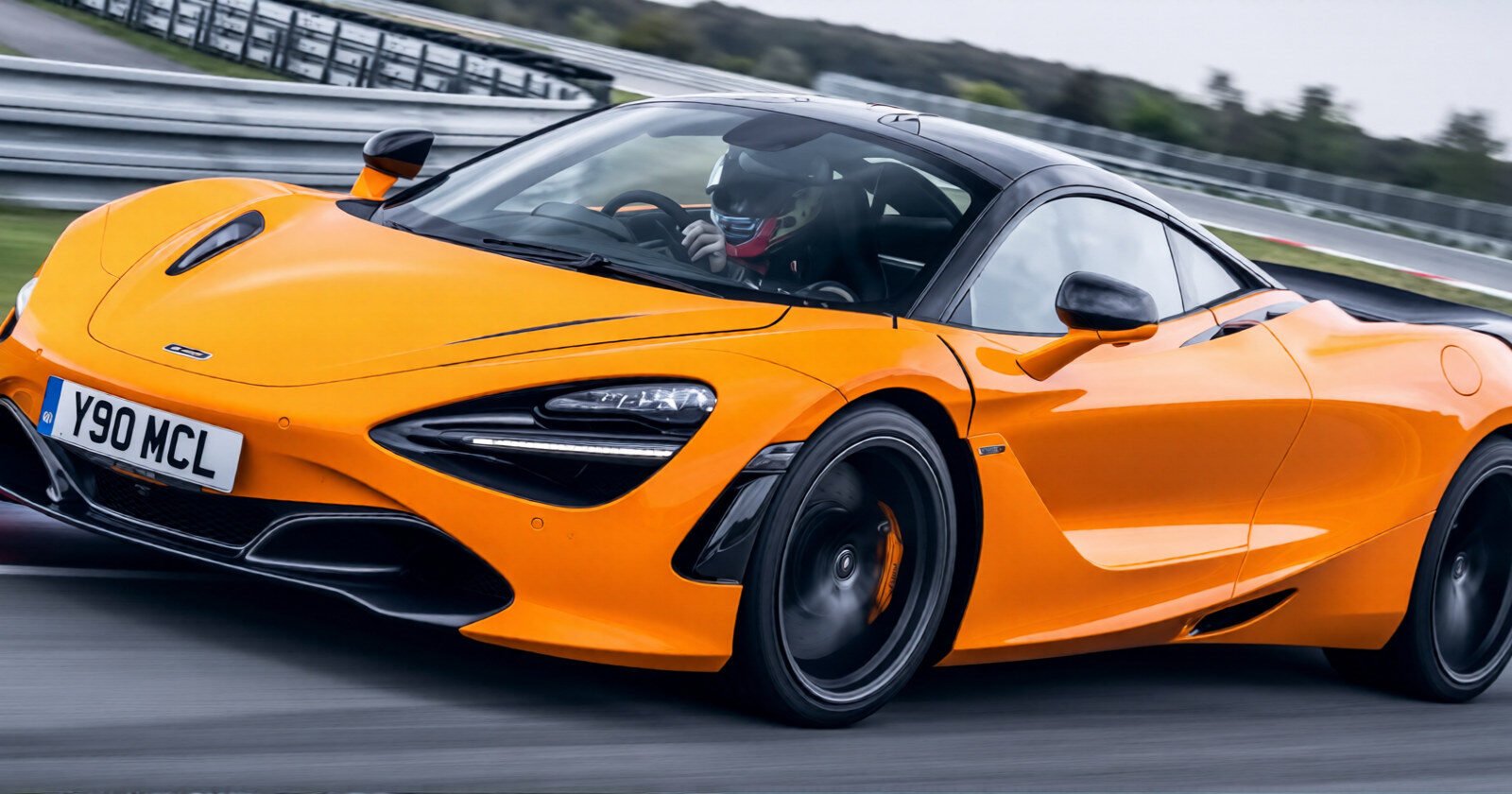
The years that followed saw McLaren expand into three distinct series: the Sports Series (540C, 570S, 600LT), the Super Series (650S, 720S, 750S), and the Ultimate Series (P1, Senna, Speedtail, Elva). Each maintained the core McLaren philosophy: carbon-fiber tub, mid-engine layout, and an unwavering focus on the driving experience.
When a McLaren F1 GTR sells for $34.6 million
When a McLaren F1 GTR sells for $34.6 million or an F1 road car commands eight figures at auction, the price tag reflects far more than leather and horsepower, as several forces converge to make these machines among the most valuable assets on Earth.
Scarcity is absolute: only 106 F1s were ever built and only 28 F1 GTRs existed across three racing seasons, so when supply is fixed at a few dozen units and demand includes the world’s wealthiest collectors, prices obey their own logic and these vehicles become fractional assets with steering wheels. They also won the hardest race on Earth, and a car that wins Le Mans is no longer just transportation but a historical artifact — the F1 GTR won outright in 1995 on its debut, beating purpose-built prototypes with what was essentially a lightened road car, a victory that transformed the F1 from a great supercar into a motorsport legend.
The analog premium is equally real: in an era racing toward electrification and autonomous driving, these cars represent the exact opposite with naturally aspirated engines, manual or mechanical gearboxes, no stability control, no hybrid assist, and no lane-keeping, while the F1 GTR’s BMW V12 screams to 8,500 RPM and collectors pay a premium for purity that will never be manufactured again. They were also engineering revolutions, as the F1 was the first production car with a carbon-fiber monocoque in 1992 — space-race technology in the 1990s that still feels modern three decades later — and they are the last of their kind, with the F1 GTR being the last Le Mans winner developed directly from a GT hypercar and the F1 the last great supercar built without a single concession to comfort or compromise, a reality the market has embraced since regulations, safety standards, and electrification have ensured there is no rewind button.
Celebrity and story add millions as well, proven by Nick Mason’s 25-year ownership of an F1 GTR, which elevated the car from automotive history to cultural history, with provenance — who owned it, what it won, how it was preserved — adding millions in intangible value. The bottom line is that you are not paying for transportation but for irreplaceable history, engineering purity, and the end of an era wrapped in carbon fiber and screaming V12s.
The Road Ahead
Today, McLaren stands at another crossroads. Under CEO Nick Collins and new ownership by Abu Dhabi’s CYVN Holdings, the company is navigating the transition from pure internal combustion to hybrid and, eventually, full electrification. The Artura, launched in 2022, represents the first step — a hybrid supercar built on an all-new carbon-fiber architecture. The upcoming W1 hypercar promises to carry the “1” lineage into a new era.
Yet through all the changes, one thing remains constant: the spirit of Bruce McLaren. The boy who restored an Austin 7 in his father’s garage, who drove to Europe with nothing but talent and ambition, who built a racing empire from a small workshop in Surrey. His legacy is not just in the cars that bear his name, but in the philosophy they embody — that with enough ingenuity, determination, and courage, the impossible is merely a challenge waiting to be overcome.
From a Kiwi garage to the pinnacle of motorsport and supercar manufacturing, McLaren’s story is one of the great automotive narratives. And it is far from over.