listen to the audio of this article:
Rising from the rolling hills of Whitehaven, just south of downtown Memphis, Graceland is far more than a mansion — it is a pilgrimage site, a time capsule of 1970s excess, and the most visited private home in America after the White House. For twenty years, it was the sanctuary of Elvis Presley, the King of Rock ‘n’ Roll, and since his death in 1977, it has drawn nearly 25 million visitors who come to walk the same halls, gaze at the same shag carpets, and pay respects at the Meditation Garden where Elvis rests alongside his family.
Before the King: The Toof Family Estate
Long before Elvis, the land belonged to Stephen C. Toof, founder of Memphis’s oldest commercial printing firm. He named his farmland “Graceland” in honor of his daughter, Grace, who inherited the property when he died in 1894.
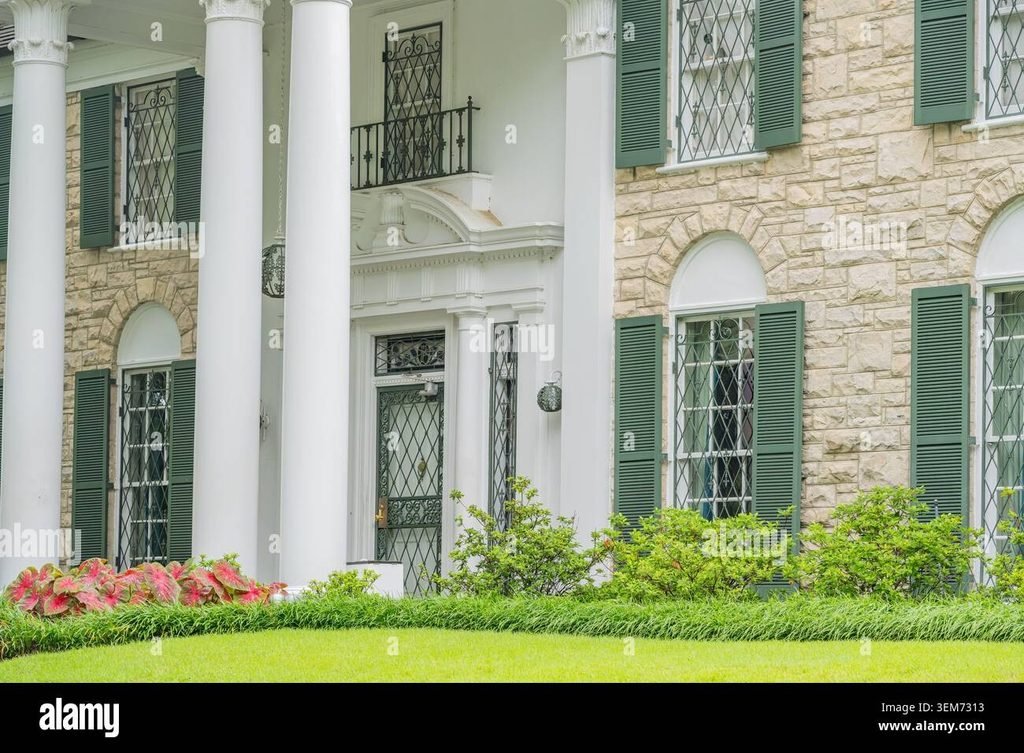
In 1939, Grace’s niece Ruth Moore — a Memphis socialite and musical prodigy who played harp with the Memphis Symphony Orchestra — and her husband, Dr. Thomas Moore, built the original 10,266-square-foot Colonial Revival mansion on the site. Designed by architects Furbringer and Ehrman, the house featured Tishomingo limestone from Mississippi, a central two-story portico with Corinthian columns, and a side-facing gabled roof. The Moores often hosted musical recitals at the estate, giving Graceland an artistic pedigree that would later suit its famous resident perfectly.
Elvis Arrives: 1957 and the Transformation
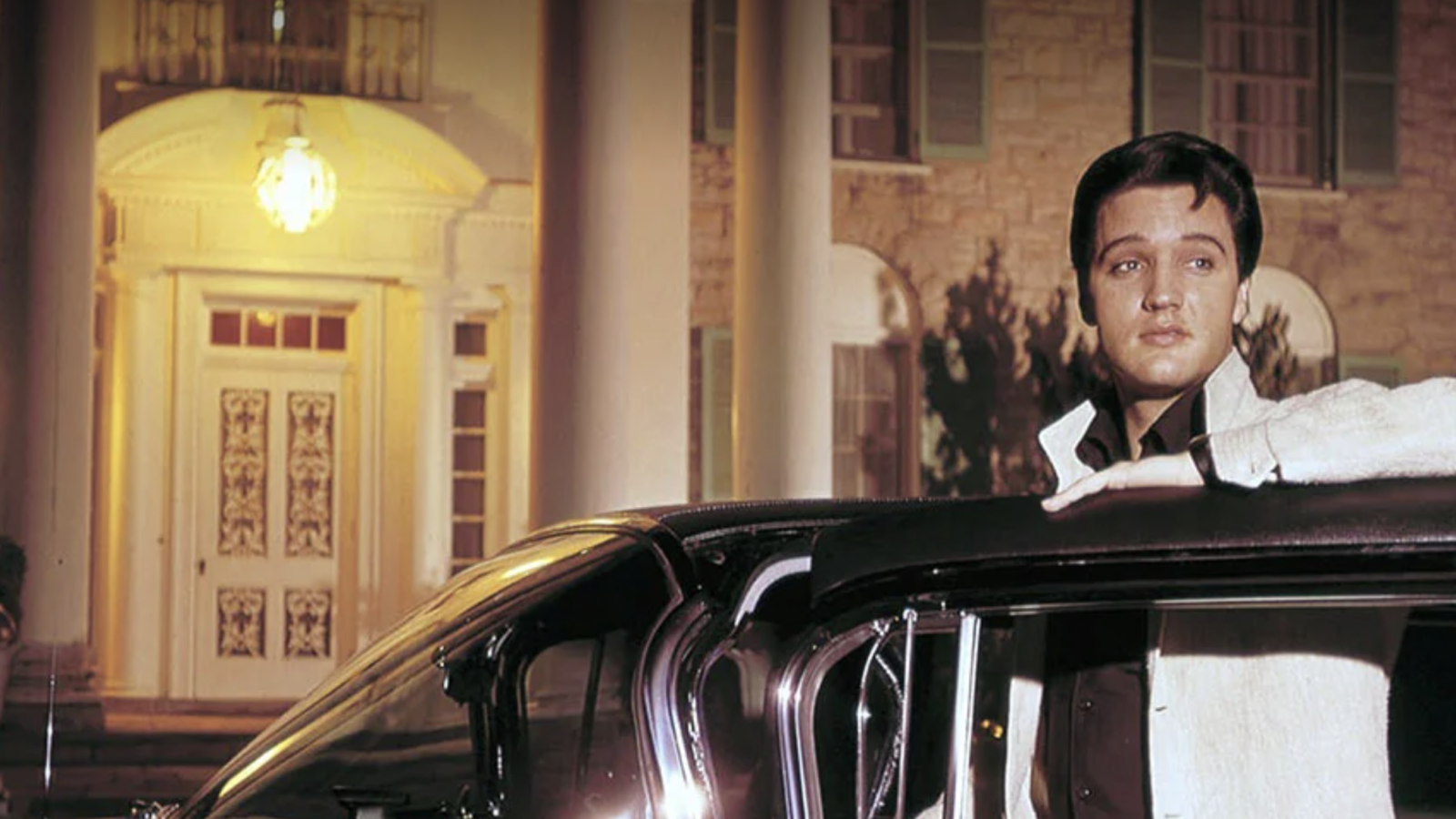
By 1956, Elvis Presley had exploded into global superstardom. His modest home on Audubon Drive in East Memphis was no longer sufficient — fans and journalists camped outside daily, and neighbors had grown weary of the chaos. In early 1957, Elvis gave his parents, Vernon and Gladys, a budget of $100,000 and instructions to find a farmhouse-style property with plenty of buffer space.
On March 19, 1957, Elvis purchased Graceland — the house, barn, and 13.8 acres — for $102,500. He was just 22 years old. Immediately, he began expanding the estate, eventually growing it to 17,552 square feet and 23 rooms with eight bedrooms, eight bathrooms, and five staircases.
The famous pink Alabama fieldstone wall was erected in 1957 to protect Elvis’s privacy, and on April 22, 1957, the iconic custom-built wrought-iron gates were installed — decorated with stylized guitar-strumming figures of Elvis set against musical staffs and notes. The gates were later restored in 1990 by the National Ornamental Metal Museum and remain one of the most photographed entryways in the world.
In 1971, the Memphis City Council renamed the stretch of South Bellevue to Elvis Presley Boulevard, making the address officially 3764 Elvis Presley Boulevard.
Inside the Mansion: A Tour of the Rooms
Visitors entering Graceland today step into the foyer, where a crystal chandelier hangs above and twin staircases sweep upward. To the left is the formal living room, connected to the music room by a doorway flanked by two ornamental stained-glass peacocks — added by the Laukhuff Stained Glass Company in 1974 and now among the mansion’s most recognizable features.
The dining room features a massive crystal chandelier, six plush chairs in golden metal frames, and a marble table set on black marble flooring. Connected to it is the kitchen, which remained in active use by Elvis’s aunt, Delta Mae Presley Biggs (“Aunt Delta”), until her death in 1993. It was opened to the public two years later.
The Jungle Room
Perhaps the most famous room in Graceland is the Jungle Room. Originally an exterior screened-in porch added in the mid-1960s, it was later enclosed and, in 1974, Elvis redecorated it with Polynesian-themed furnishings he discovered at a Memphis furniture store. The result is a fever dream of green shag carpeting on the floor and ceiling, carved wood furniture, faux wood walls, rainbow lighting, and an indoor waterfall of cut field stone on the north wall. Elvis loved it because it reminded him of Hawaii, where he filmed Blue Hawaii and performed his legendary Aloha from Hawaii concert.
In 1976, the Jungle Room was converted into a makeshift recording studio, where Elvis cut the bulk of his final two albums — From Elvis Presley Boulevard, Memphis, Tennessee and Moody Blue — yielding his last three Top 40 singles: “Hurt,” “Moody Blue,” and “Way Down.”
The Basement: TV Room and Pool Room
Downstairs, Elvis’s personality shines through in two unforgettable spaces. The TV Room, painted and decorated in yellow and black, features three television sets built into the south wall so Elvis could watch all three major networks simultaneously — an idea inspired by President Lyndon B. Johnson. The room also features a spooky white monkey statuette on its center table, which later inspired Warren Zevon’s song “Porcelain Monkey.”
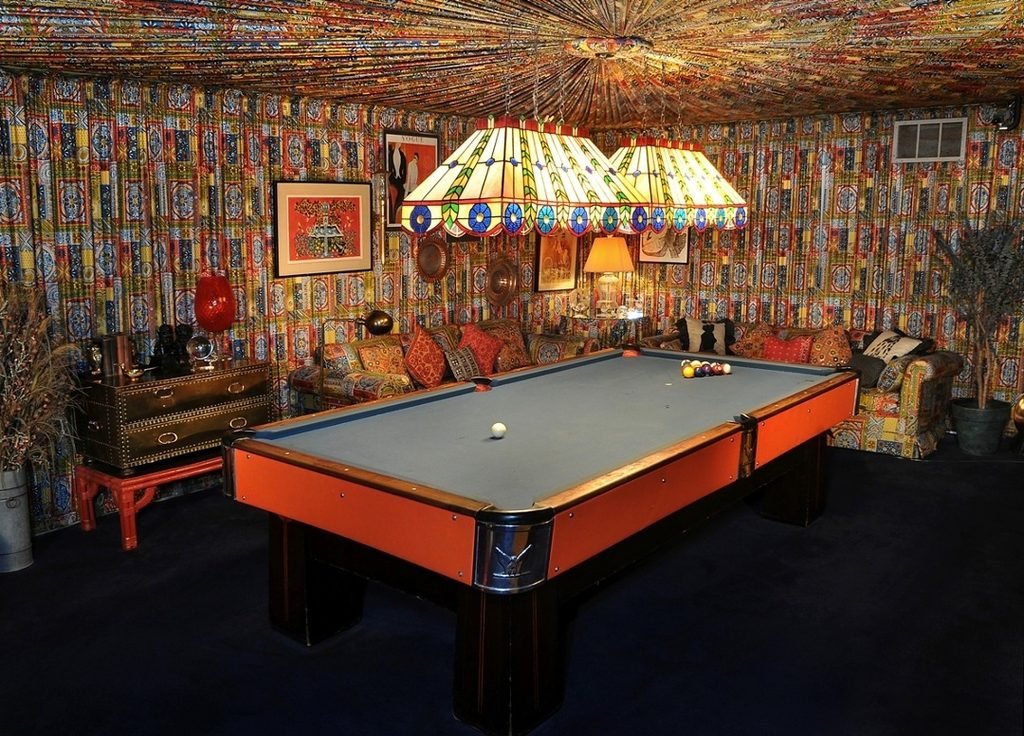
Adjacent is the Pool Room, its walls and low ceiling covered in close to 400 yards of vividly multi-colored pleated fabric, creating a claustrophobic, kaleidoscopic cocoon around a central pool table. As Elvis Presley Enterprises PR director Kevin Kern noted, “Elvis never lost a game of pool on that table. Everyone knew Elvis had to win.”
The Racquetball Building and Trophy Building
In 1975, Elvis added a two-story racquetball building behind the mansion, complete with a full court, pinball machines, and a trophy hall. It was here, at an upright piano, that Elvis performed “Unchained Melody” and “Blue Eyes Crying in the Rain” not long before his death.
The Trophy Building houses an evolving exhibit on the Presley family, including Priscilla’s wedding dress, Elvis’s wedding tuxedo, Lisa Marie’s toy chest and baby clothes, and his extensive police badge collection.
The Grounds: Horses, Planes, and the Meditation Garden
Elvis was an avid animal lover. Graceland’s grounds were home to horses — his favorite being Rising Sun, a golden palomino — as well as dogs, donkeys (which Elvis reportedly kept in his kidney-shaped swimming pool before it was filled), a chimpanzee named Scatter, a squirrel monkey named Jayhew, and even a mynah bird trained to say, “Elvis isn’t here.”
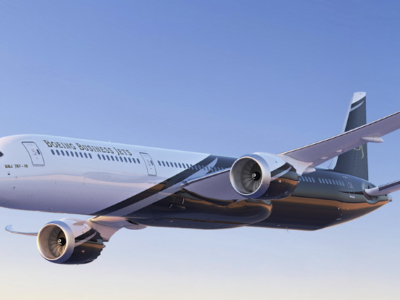
Across the street from the mansion, visitors can tour Elvis’s two private jets. The Lisa Marie — a Convair 880 purchased from Delta Airlines in 1975 for $250,000 — features a private bedroom with a queen-size bed, a conference room, a living room, two half-baths, gold-plated seatbelts, suede sofas, leather-covered tables, and a 52-speaker stereo system. The smaller Hound Dog II, a Lockheed JetStar, seats about ten passengers. Both arrived at Graceland in February 1984 and have been on display ever since.
The Meditation Garden, constructed in 1964–65, is the emotional heart of Graceland. With its circular pool, fountains, stained-glass panels, and Ancient World-inspired columns, it is the final resting place for six members of the Presley family: Elvis Aaron Presley; his daughter Lisa Marie Presley; his parents Vernon and Gladys; his grandmother Minnie Mae; and his grandson Benjamin Storm Presley Keough. A memorial marker also honors Elvis’s stillborn twin brother, Jessie Garon Presley.
The Garden is the focal point of the annual Candlelight Vigil, held every August on the anniversary of Elvis’s death. The first vigil was held in 1978 by fans from the Austin, Texas-based Elvis Country Fan Club, and today it draws thousands who walk silently through the gates bearing candles.
The Night of August 16, 1977
Elvis Presley died at Graceland on August 16, 1977, at the age of 42. After playing the piano in the racquetball building, he went upstairs to his bedroom suite, where his girlfriend Ginger Alden discovered him unresponsive on the bathroom floor. He was rushed to Baptist Hospital and pronounced dead.
His funeral was held at Graceland on August 18, 1977, with a eulogy delivered by comedian Jackie Kahane, who had opened many of Elvis’s concerts. A public viewing in the mansion’s foyer the day before drew an estimated 10,000 to 25,000 mourners, while tens of thousands more gathered along Elvis Presley Boulevard.
Elvis and his mother were originally buried at Forest Hill Cemetery, but after a bizarre plot to steal Elvis’s body and hold it for ransom was uncovered, their remains were moved to the Meditation Garden at Graceland on October 2, 1977.
From Private Home to Public Shrine
After Elvis’s death, his father Vernon remained at Graceland until his death in 1979, followed by grandmother Minnie Mae in 1980. But the most tenacious resident was Aunt Delta, who lived at Graceland from 1966 until her death in 1993 — even after the mansion opened to the public in 1982. During her residency, the kitchen and her bedroom remained off-limits to tourists.
Facing mounting maintenance costs — over $500,000 annually — Elvis’s ex-wife Priscilla Presley, serving as co-executor of the estate, made the bold decision to open Graceland to the public. On June 7, 1982, Graceland welcomed its first tourists. Admission was $5. By the end of that year, over 330,000 visitors had walked through the doors — far exceeding projections.
In 1991, Graceland was listed on the National Register of Historic Places — the first rock ‘n’ roll-related site to receive the honor. In 2006, it was declared a National Historic Landmark, again a first for a rock music site.
Under the terms of Elvis’s will, Lisa Marie Presley inherited Graceland when she turned 25 in 1993. After her death in January 2023, the estate passed to her eldest daughter, actress Riley Keough, who now serves as sole trustee and owner.
Today, Graceland attracts roughly 500,000 to 600,000 visitors annually and is approaching the 25 million mark in total attendance since 1982. The estate has expanded into a 200,000-square-foot entertainment complex, Elvis Presley’s Memphis, featuring museums, restaurants, gift shops, and the Soundstage at Graceland venue. The Guest House at Graceland, a 450-room resort hotel, opened nearby to accommodate the constant stream of pilgrims.
Famous Trespassers and Visitors
Graceland has attracted its share of uninvited guests. In November 1976, Jerry Lee Lewis — Elvis’s contemporary and rock ‘n’ roll rival — was arrested outside the gates around 3 a.m., “screaming and yelling and waving a Derringer in the air” while demanding to see Elvis.
In April 1976, Bruce Springsteen, after his Memphis concert debut, took a taxi to Graceland with E Street Band guitarist Steve Van Zandt. Seeing a light on inside, Springsteen jumped the wall and ran up the driveway, only to be intercepted by security. As Springsteen later told concert crowds: “I said, ‘Steve, man, I gotta go check it out.’ And I jumped up over the wall and I started runnin’ up the driveway… Guards came out of the woods and they asked me what I wanted. And I said, ‘Is Elvis home?'” He was politely escorted back to the street.
On the more formal side, President George W. Bush became the first sitting U.S. President to visit Graceland on June 30, 2006, escorting Japanese Prime Minister Junichiro Koizumi — an Elvis superfan who shares the King’s January 8 birthday. Koizumi reportedly serenaded the Bushes and Presleys with snippets of “Love Me Tender.”
In March 2026, President Donald Trump visited Graceland, sitting in the Jungle Room and signing a guitar decorated with a karate patch in recognition of Elvis’s “two eighth-degree black belts.”
Other notable visitors in recent years include Paul McCartney (who left a guitar pick on Elvis’s grave “so Elvis can play in heaven”), Taylor Swift, Dua Lipa, Lana Del Rey, the Foo Fighters, Gene Simmons, and Prince William and Prince Harry, who visited in 2014.
Legacy
Graceland is more than a museum — it is a monument to the American dream, a place where a boy from Tupelo, Mississippi, who grew up in public housing, built a castle worthy of a king. Paul Simon, who named his Grammy-winning 1986 album Graceland after the estate, described the experience of visiting best: after being “singularly unimpressed” by the tour itself, he stepped outside into the Meditation Garden, read the inscription on Elvis’s grave — Elvis Presley, whose music touched millions of people all around the world — and “just started to cry.”
Nearly fifty years after Elvis’s death, Graceland endures — a white-columned temple on a hill where the music never really stopped, and where the King, in the hearts of millions, never truly left the building.