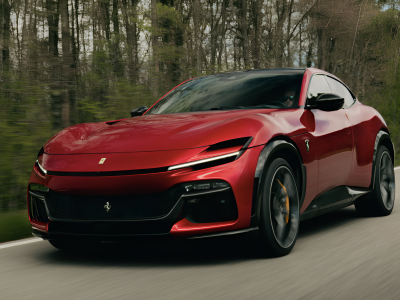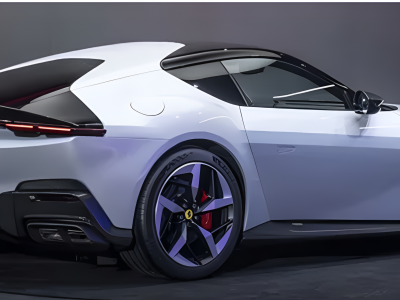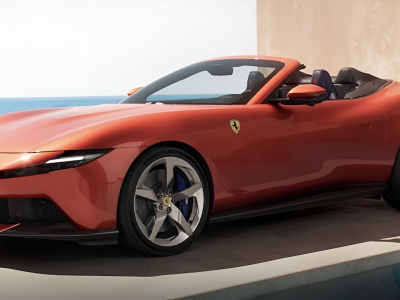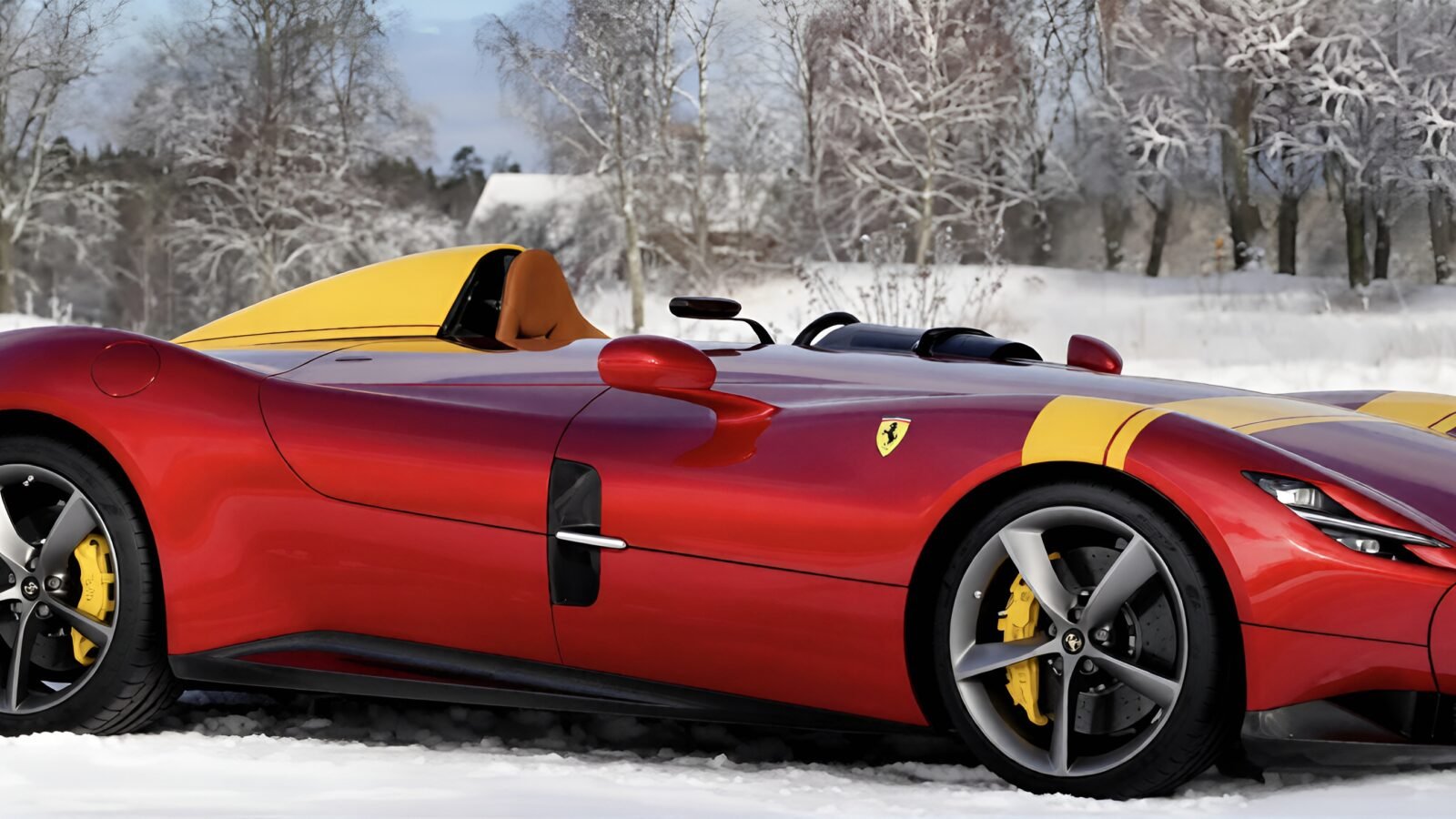
In October 2018, Ferrari unveiled something that looked less like a modern hypercar and more like a time machine. It had no roof, no windshield, and, most strikingly, no passenger seat. This was the Monza SP1, the first entry in Ferrari’s newly launched “Icona” — Italian for “icon” — series, a line of cars built to revisit the most romantic chapters of Ferrari’s racing history using every ounce of the company’s current engineering knowledge. Alongside its two-seat sibling, the SP2, the SP1 wasn’t a retro pastiche or a design exercise. It was a fully engineered, street-legal supercar that happened to look like it drove straight out of the 1950s.
Reviving the Spirit of the Barchetta
The Monza SP1 takes its name and inspiration from the Ferrari 750 Monza and 860 Monza, open-cockpit racers that helped define the marque’s competition success in the mid-1950s, along with echoes of the 166 MM “barchetta” that came before them. Those cars were minimalist by necessity — stripped of anything that didn’t contribute to speed, with drivers exposed to the elements behind a small aero screen. Ferrari’s design team, led by Flavio Manzoni, set out to capture that same purity of purpose without simply copying the old shapes.
The result is a car with a long, low, almost weightless-looking silhouette. The single-seat cockpit sits toward the rear of the body, flanked by a “virtual windshield” — a channel of air redirected by a deflector ahead of the driver that keeps buffeting to a minimum at speed despite the absence of any physical windscreen. There’s no roof, no conventional door glass, and barely any interior trim beyond what’s needed to operate the car. It’s a design statement built on restraint, and it succeeds specifically because everything visible on the car is there for a functional reason.
What’s Under the Skin
Underneath its barchetta bodywork, the Monza SP1 shares its platform loosely with the Ferrari 812 Superfast, and that relationship extends to its heart: a 6.5-liter naturally aspirated V12, codenamed F140 GA. In the SP1 and SP2, that engine was tuned to produce 799 horsepower (810 PS) at 8,500 rpm and 530 lb-ft of torque at 7,000 rpm — at the time of launch, the most powerful naturally aspirated engine Ferrari had ever put in a road car. Power reaches the rear wheels exclusively; there’s no all-wheel-drive system here, in keeping with the car’s old-school, driver-focused ethos.
That V12 is mated to a seven-speed dual-clutch automatic transmission, and the results are suitably dramatic: 0-62 mph arrives in roughly 2.9 seconds, and the SP1 clears 124 mph (200 km/h) in well under 8 seconds, with a top speed north of 186 mph. Ferrari kept weight in check by wrapping the chassis and body almost entirely in carbon-fiber composite, bringing the SP1’s dry weight down to around 1,500 kg (roughly 3,300 lbs) — notably light for a car with this much power and presence.
Despite its exposed cockpit, the Monza SP1 isn’t quite as spartan as it first appears. Ferrari equipped it with technology like the aforementioned airflow management system, a digital instrument cluster, and even heated surfaces around the cockpit to make top-down driving more bearable at speed. It’s a car designed to be genuinely driven, not merely displayed — the absence of a roof and windshield reflects a design philosophy, not a lack of engineering effort.
A One-Seat-Only Statement
Perhaps the most talked-about feature of the Monza SP1 is its single seat. While the companion SP2 offers a second seat for a passenger, the SP1 commits fully to the idea of a solitary, purist driving experience — deliberately closer in spirit to a competition car than a grand tourer built for two. Interestingly, Ferrari still gave the SP1 a functional passenger-side door; underneath the carbon cover on that side sits a fully finished panel, essentially a completed passenger area that was simply never opened up to use, a small but telling detail about how closely related the SP1 and SP2 actually are underneath their differing personalities.
That single-seat layout puts the Monza SP1 in a different category from rivals like the two-seat McLaren Elva or the Aston Martin V12 Speedster, both of which emerged shortly after as competitors in the increasingly crowded market for windshield-less, limited-run speedsters. Ferrari’s choice to offer a genuinely single-seat option gave the SP1 a distinct identity: not just an open-top hypercar, but the closest thing to a modern Ferrari racing barchetta that money could buy.
Exclusivity and Price
Ferrari built the Monza SP1 and SP2 together as a combined run of 499 cars, offered only to existing top-tier Ferrari clients rather than sold on the open market. Deliveries began in 2019, and by the time production wrapped in 2022, the pair had become two of the most sought-after cars to wear the prancing horse badge in recent memory.
At launch, the Monza SP1 carried a price of around €1.5 to €1.6 million before taxes and options — translating to roughly $1.75 million in the United States at the time, though early estimates before the official reveal had speculated figures as high as $2-3 million. Given the limited allocation and Ferrari’s control over who could buy one, those original prices proved to be only the starting point. On the secondary and auction markets, values have climbed well beyond the factory sticker; individual SP1 and SP2 examples have fetched prices in the multiple millions of dollars at auction houses in the years since, reflecting both their rarity and Ferrari’s broader track record of limited-edition models appreciating sharply once production ends.
Why the Monza SP1 Matters
The Monza SP1 could easily have been a nostalgia exercise — a coachbuilt curiosity wheeled out for auto show photographs and then forgotten. Instead, it represents something more deliberate: Ferrari using its most advanced contemporary engineering, from its most powerful naturally aspirated V12 to sophisticated aerodynamic modeling, in service of a design language and driving philosophy pulled directly from its own racing archives. It doesn’t just look like a 1950s Ferrari race car; it tries to recreate the feeling of driving one, filtered through decades of progress in materials, power, and control.
As the first car in the Icona series — a program Ferrari has continued with a small number of similarly bespoke, historically minded models — the Monza SP1 set the template for how the company intends to celebrate its own history going forward: not through retro styling exercises, but through fully modern hypercars built around the emotional core of what made those earlier machines special in the first place. For the handful of owners who actually take theirs out on an open road with the wind hitting them directly, that’s exactly the point.