listen to the audio of this article
For a brief but headline-grabbing stretch in the world of ultra-luxury real estate, the title of one of the most expensive private homes ever sold belonged to an estate above the harbor on Hong Kong’s Victoria Peak. The sale price: roughly HK$2.8 billion, or approximately US$361 million — a figure so large that it briefly placed the property among a small handful of the priciest residential transactions ever recorded anywhere on Earth.
A Rare Address on The Peak
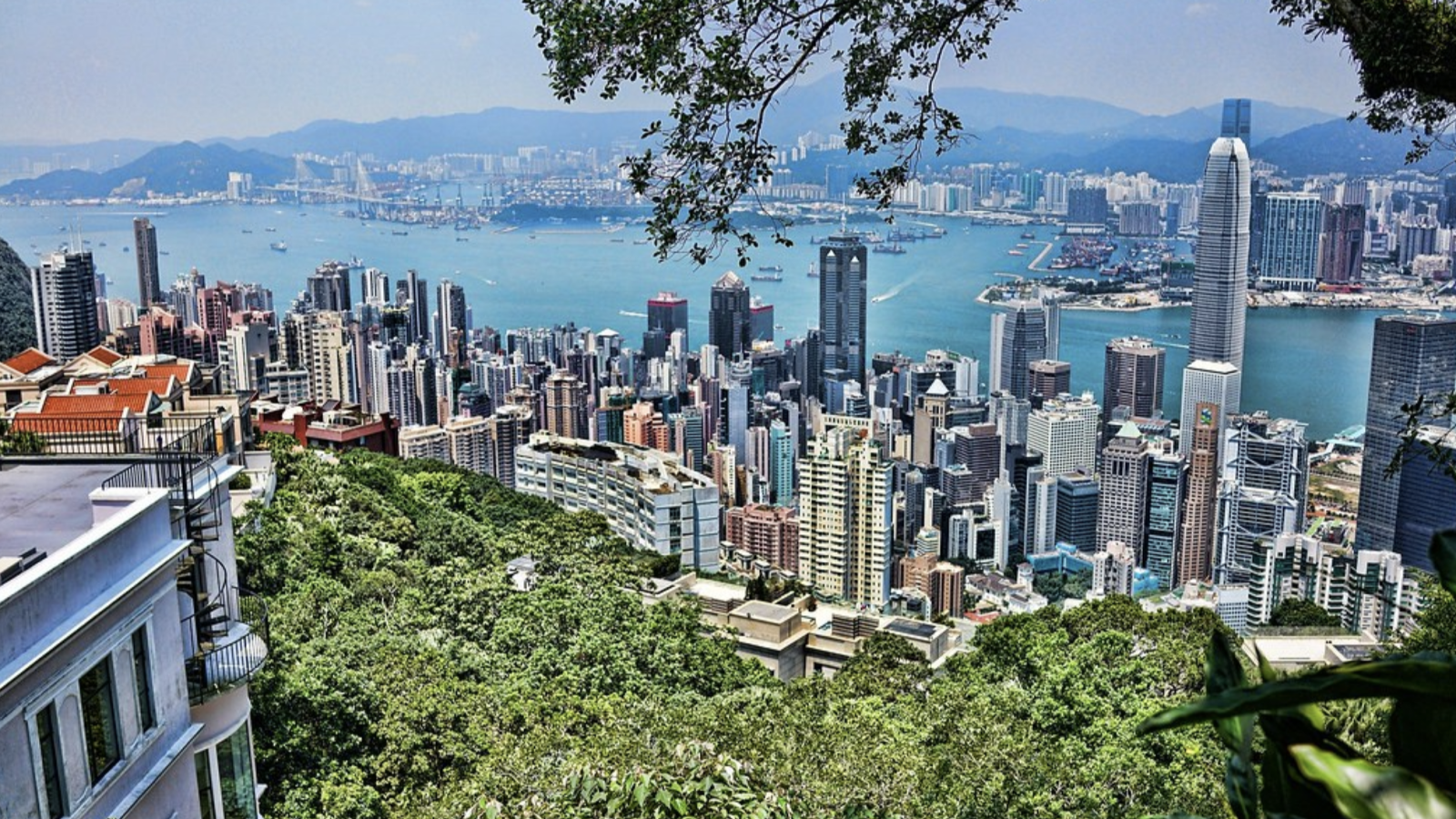
The property in question sits at an address within one of the most exclusive enclaves in Hong Kong — The Peak, the mountain district that has long served as the city’s most prestigious residential zone, home to its wealthiest tycoons, top executives, and increasingly, its mainland Chinese business elite. Pollock’s Path itself has at various points ranked among the most expensive streets in the world on a price-per-square-foot basis, a distinction that reflects both its elevation and its extreme scarcity — there are only so many parcels of land available on a mountainside overlooking Victoria Harbour, and virtually none of them come onto the market with any regularity.
What made this particular sale so remarkable wasn’t just the price, but the scale of the land itself. The estate spans roughly 51,000 square feet — an almost unheard-of footprint in a city where land is so constrained that even modest single-family homes routinely command tens of millions of dollars. In Hong Kong, where multi-generational apartment towers stack tens of thousands of residents into single city blocks, a sprawling 51,000-square-foot private estate represents a kind of luxury that money alone often cannot buy, simply because the underlying land doesn’t exist to sell.
A Century-Old House Known as “The Pink House”
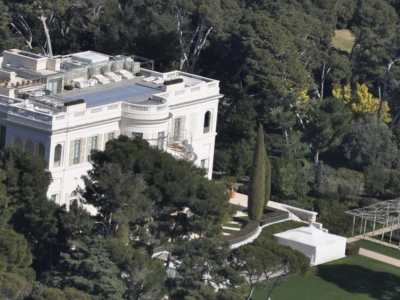
Before it became the site of a record-breaking sale, this address at 5 Pollock’s Path carried an entirely different identity: locals simply called it “The Pink House.” Its formal name, still visible on old maps, was Hilden, and for more than fifty years it belonged to Charles and Rosamond Brown — he an American architect, she a British artist — whose rambling colonial-era mansion had become one of the last of its kind on The Peak. Rather than a sleek modern trophy home, the original structure was a century-old rambling residence, the kind increasingly rare in a city that has methodically replaced its low-rise colonial heritage with high-density towers.
The house’s architecture told a story as much as its interiors did. Charles Brown, by profession an architect, spent decades acting as an informal custodian of Hong Kong’s disappearing built heritage, rescuing salvaged colonial-era fragments whenever contractors demolished older buildings around the city. Those artifacts found their way into the home itself — most memorably, a coffee table fashioned from a stone pediment that once adorned the old General Post Office before it was torn down. Even the driveway had history: it was carved from an old path once used by sedan-chair carriers hauling residents up and down The Peak, a detail the Browns deliberately preserved.
For decades the house functioned as a kind of unofficial social hub for The Peak’s eclectic set — a mix of artists, architects, journalists, and the occasional colonial governor, drawn less by ceremony than by the Browns’ famously loose, creative gatherings. The neighboring property at 8 Pollock’s Path had, for comparison, been considerably more formal: the French Consul General’s official residence, sold off in 2011 for roughly HK$580 million before it, too, was demolished. The Browns’ home outlasted it by several years, in part because Charles Brown continued financing its upkeep by renting out an adjacent block of flats rather than selling outright.
That equilibrium finally broke after Charles Brown’s death in 2012. Maintaining a century-old mansion of that scale — and navigating its notoriously steep access stairs — became untenable for Rosamond Brown alone, and in January 2017 she sold both the main house and the neighboring rental block in a single transaction, reported at the time at roughly HK$3.2 billion including taxes, to a company called, fittingly, High Grand Development.
The Buyer: A Billionaire Behind the iPhone Screen
That company was owned by Yeung Kin-man, founder of Biel Crystal Manufactory — a name unfamiliar to most consumers, despite the fact that his company’s products are held by a significant share of the planet’s smartphone users every single day. Biel Crystal manufactures touchscreen glass, and by some estimates, the company supplies the screens used in roughly two out of every three iPhones sold worldwide. It is precisely the kind of business that thrives in the background of the global technology supply chain: essential, highly profitable, and almost entirely unknown to the public whose devices depend on it.
That obscurity extends to Yeung himself, who has maintained an unusually low public profile relative to his wealth. At the time of the purchase, Yeung and his wife, Lam Wai-ying, ranked eighth among Hong Kong’s fifty wealthiest individuals and families, with a combined net worth estimated at approximately US$8.4 billion. Raymond Lee, chief executive of Savills Greater China — the brokerage that handled the transaction — described Yeung as a “low-profile billionaire,” a characterization that fits a broader pattern among The Peak’s wealthiest residents, many of whom prize discretion as highly as they prize the views.
From Heritage to a Blank Slate
According to Lee, Yeung’s plans for the property were not to preserve or move into the Browns’ storied home, but to demolish it entirely and build a new family home from the ground up. That decision reflects a recurring tension on The Peak: unlike some heritage properties nearby that have been partially retained through conservation-minded redevelopment, the Pink House had no such protections, and its site was simply too valuable as raw land. The mansion and its collection of relics were dispersed rather than preserved intact, scattered to new homes across Hong Kong and Europe much as the salvaged fragments Charles Brown himself once collected had been.
This is itself a telling detail about how the ultra-wealthy approach trophy real estate in markets like Hong Kong: the land and the address carry the value, while the physical structure is treated as disposable — a placeholder to be replaced according to the specific tastes, needs, and privacy requirements of whoever can afford to buy the ground beneath it. In a city defined by density and vertical living, a handful of low-rise, expansive private estates on The Peak occupy a category almost entirely their own, competing directly with the world’s most storied addresses despite occupying a comparatively obscure corner of the globe.
Why Hong Kong Keeps Producing These Numbers
For a brief but headline-grabbing stretch in the world of ultra-luxury real estate, the title of one of the most expensive private homes ever sold belonged to an estate above the harbor on Hong Kong’s Victoria Peak. The sale price: roughly HK$2.8 billion, or approximately US$361 million — a figure so large that it briefly placed the property among a small handful of the priciest residential transactions ever recorded anywhere on Earth.
A Rare Address on The Peak
The property in question sits at an address within one of the most exclusive enclaves in Hong Kong — The Peak, the mountain district that has long served as the city’s most prestigious residential zone, home to its wealthiest tycoons, top executives, and increasingly, its mainland Chinese business elite. Pollock’s Path itself has at various points ranked among the most expensive streets in the world on a price-per-square-foot basis, a distinction that reflects both its elevation and its extreme scarcity — there are only so many parcels of land available on a mountainside overlooking Victoria Harbour, and virtually none of them come onto the market with any regularity.
What made this particular sale so remarkable wasn’t just the price, but the scale of the land itself. The estate spans roughly 51,000 square feet — an almost unheard-of footprint in a city where land is so constrained that even modest single-family homes routinely command tens of millions of dollars. In Hong Kong, where multi-generational apartment towers stack tens of thousands of residents into single city blocks, a sprawling 51,000-square-foot private estate represents a kind of luxury that money alone often cannot buy, simply because the underlying land doesn’t exist to sell.
A Century-Old House Known as “The Pink House”
Before it became the site of a record-breaking sale, this address at 5 Pollock’s Path carried an entirely different identity: locals simply called it “The Pink House.” Its formal name, still visible on old maps, was Hilden, and for more than fifty years it belonged to Charles and Rosamond Brown — he an American architect, she a British artist — whose rambling colonial-era mansion had become one of the last of its kind on The Peak. Rather than a sleek modern trophy home, the original structure was a century-old rambling residence, the kind increasingly rare in a city that has methodically replaced its low-rise colonial heritage with high-density towers.
The house’s architecture told a story as much as its interiors did. Charles Brown, by profession an architect, spent decades acting as an informal custodian of Hong Kong’s disappearing built heritage, rescuing salvaged colonial-era fragments whenever contractors demolished older buildings around the city. Those artifacts found their way into the home itself — most memorably, a coffee table fashioned from a stone pediment that once adorned the old General Post Office before it was torn down. Even the driveway had history: it was carved from an old path once used by sedan-chair carriers hauling residents up and down The Peak, a detail the Browns deliberately preserved.
For decades the house functioned as a kind of unofficial social hub for The Peak’s eclectic set — a mix of artists, architects, journalists, and the occasional colonial governor, drawn less by ceremony than by the Browns’ famously loose, creative gatherings. The neighboring property at 8 Pollock’s Path had, for comparison, been considerably more formal: the French Consul General’s official residence, sold off in 2011 for roughly HK$580 million before it, too, was demolished. The Browns’ home outlasted it by several years, in part because Charles Brown continued financing its upkeep by renting out an adjacent block of flats rather than selling outright.
That equilibrium finally broke after Charles Brown’s death in 2012. Maintaining a century-old mansion of that scale — and navigating its notoriously steep access stairs — became untenable for Rosamond Brown alone, and in January 2017 she sold both the main house and the neighboring rental block in a single transaction, reported at the time at roughly HK$3.2 billion including taxes, to a company called, fittingly, High Grand Development.
The Buyer: A Billionaire Behind the iPhone Screen
That company was owned by Yeung Kin-man, founder of Biel Crystal Manufactory — a name unfamiliar to most consumers, despite the fact that his company’s products are held by a significant share of the planet’s smartphone users every single day. Biel Crystal manufactures touchscreen glass, and by some estimates, the company supplies the screens used in roughly two out of every three iPhones sold worldwide. It is precisely the kind of business that thrives in the background of the global technology supply chain: essential, highly profitable, and almost entirely unknown to the public whose devices depend on it.
That obscurity extends to Yeung himself, who has maintained an unusually low public profile relative to his wealth. At the time of the purchase, Yeung and his wife, Lam Wai-ying, ranked eighth among Hong Kong’s fifty wealthiest individuals and families, with a combined net worth estimated at approximately US$8.4 billion. Raymond Lee, chief executive of Savills Greater China — the brokerage that handled the transaction — described Yeung as a “low-profile billionaire,” a characterization that fits a broader pattern among The Peak’s wealthiest residents, many of whom prize discretion as highly as they prize the views.
From Heritage to a Blank Slate
According to Lee, Yeung’s plans for the property were not to preserve or move into the Browns’ storied home, but to demolish it entirely and build a new family home from the ground up. That decision reflects a recurring tension on The Peak: unlike some heritage properties nearby that have been partially retained through conservation-minded redevelopment, the Pink House had no such protections, and its site was simply too valuable as raw land. The mansion and its collection of relics were dispersed rather than preserved intact, scattered to new homes across Hong Kong and Europe much as the salvaged fragments Charles Brown himself once collected had been.
This is itself a telling detail about how the ultra-wealthy approach trophy real estate in markets like Hong Kong: the land and the address carry the value, while the physical structure is treated as disposable — a placeholder to be replaced according to the specific tastes, needs, and privacy requirements of whoever can afford to buy the ground beneath it. In a city defined by density and vertical living, a handful of low-rise, expansive private estates on The Peak occupy a category almost entirely their own, competing directly with the world’s most storied addresses despite occupying a comparatively obscure corner of the globe.
Why Hong Kong Keeps Producing These Numbers
The Pollock’s Path sale was not an isolated anomaly. It’s part of a long-running pattern unique to Hong Kong’s particular combination of geography and economics. The Peak district, along with a small cluster of similarly exclusive enclaves — Gough Hill Road, Barker Road, and a handful of others — has repeatedly produced some of the highest per-square-foot home prices anywhere on the planet. The reasons are structural: Hong Kong’s mountainous terrain sharply limits buildable land at any elevation, and government leasing and zoning policy has historically constrained supply further in these prime pockets. Layer on decades of sustained capital inflows — first from homegrown tycoons, increasingly from mainland Chinese buyers seeking secure, prestige-laden places to park capital — and the result is a level of scarcity-driven competition few other markets can match.
A Fleeting Crown
Titles like “world’s most expensive home” in the world of ultra-luxury real estate are notoriously fluid, shifting almost as quickly as each new blockbuster sale closes. That fleetingness is, in its own way, the real story here. It isn’t really about any single house, however extraordinary — even one as rich with history as the Pink House. It’s about what a small, tightly concentrated group of buyers, in a small, tightly concentrated cluster of neighborhoods, are willing to pay for the privilege of owning land that, in a very literal sense, cannot be replicated. Hong Kong’s Peak district doesn’t just sell homes; it sells access to one of the few genuinely irreplaceable commodities left in global real estate, and its record books will almost certainly keep being rewritten for exactly that reason.