listen to the article
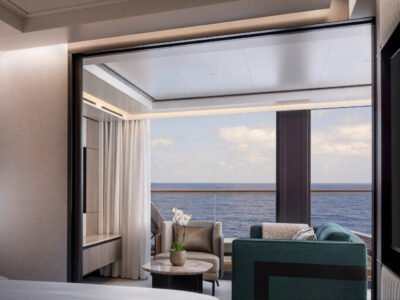
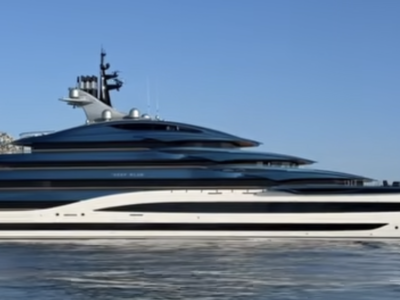
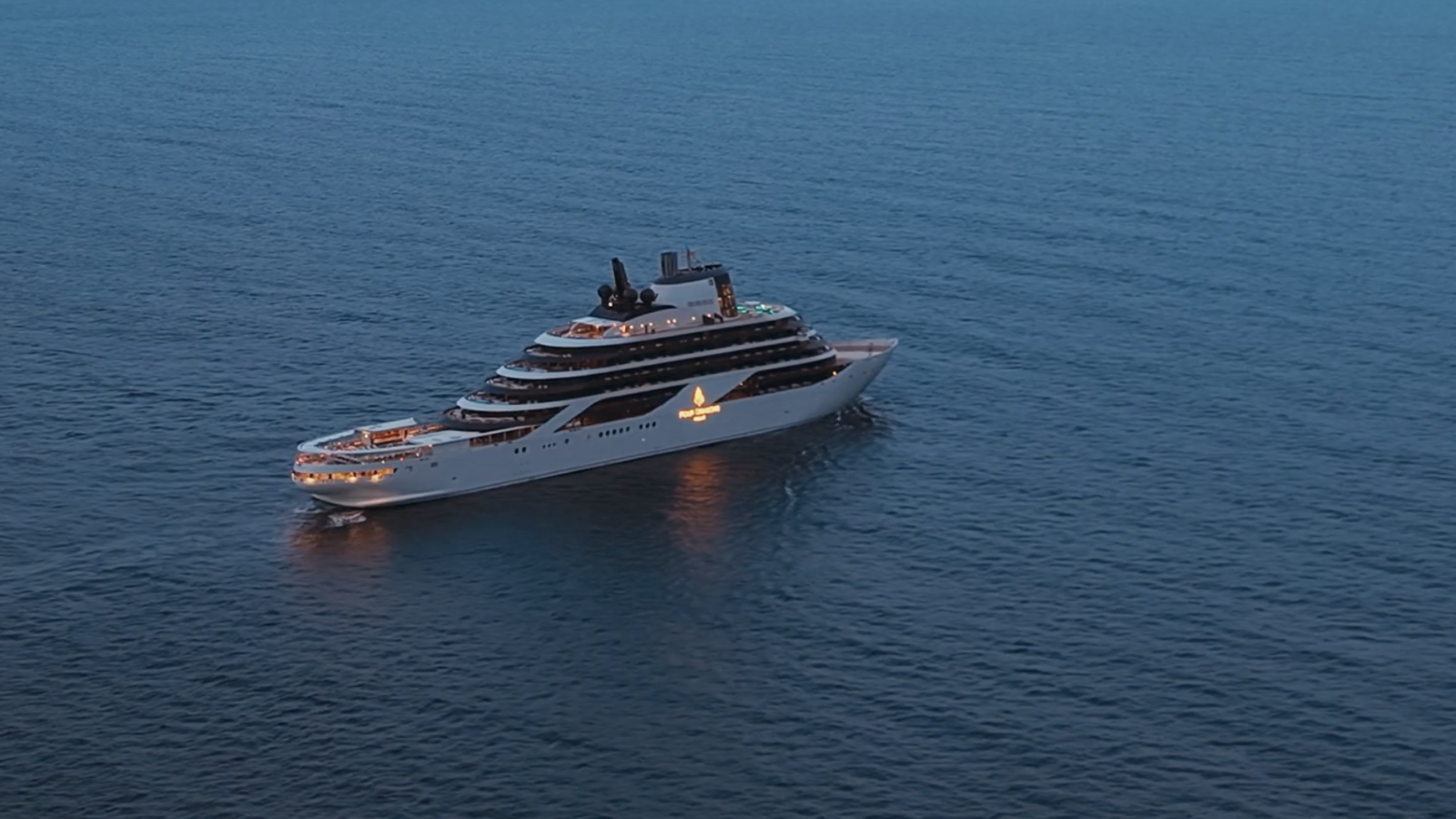
When Four Seasons I set sail on its voyage in early 2026, the Toronto-based hospitality brand made a wager few companies would dare: that 190 guests at a time would pay hotel prices for a vessel that pointedly isn’t a cruise ship.
The numbers support the ambition. The yacht carries a maximum of 190 guests across 95 suites, staffed by a crew of roughly 190 — a one-to-one ratio that mainstream cruise lines, typically running one crew member for every two or three passengers, cannot approach. Entry-level suites start around $1,900 per night on transatlantic crossings, rising to roughly $3,350 on peak Mediterranean itineraries.
The promise: a floating hotel
Four Seasons executives have avoided the word “cruise” entirely, and the hardware backs the distinction. There are no buffets, no casinos, no thousand-seat theaters. Instead: eleven dining venues — from formal restaurants Sedna and Terrasse to the sushi bar Miuna — a density of restaurants per guest that the company claims exceeds any competing luxury yacht.
The design showpiece is the transom marina: underway, an observation lounge; at anchor, a private overwater platform with steps descending directly into the sea, an ocean pool, and sunbathing decks. At the top of the accommodation ladder, the four-deck Funnel Suite spans nearly 9,600 square feet with a private spa area.
Programming leans into wellness. November’s “The Lanserhof Reset” transatlantic crossing brings the European medical-spa group’s diagnostics and treatments aboard an eight-night voyage from Gran Canaria to Sint Maarten — fares from $18,000 per suite, plus a $5,000-per-guest program with limited capacity.
The bigger picture
The economics are worth watching. With only 95 suites, every sailing depends on filling rooms at hotel prices — which helps explain the programming strategy. Themed residencies like the Lanserhof partnership layer high-margin experiences, the transatlantic repositioning voyages, transforming what would otherwise be utilitarian crossings into signature experiences.
The wellness traveler gets medical-grade programming wrapped in a suite at roughly $2,250 per night while Four Seasons builds a new category of travel it can own outright.
For prospective guests eyeing late 2026 sailings, the timing matters. By November, the ship will have nearly a year of operations behind it — the venue openings and service rhythms that characterize a launch season settled into the consistency the brand is known for on land.