listen to the audio
The Arrival That Stopped the Harbor
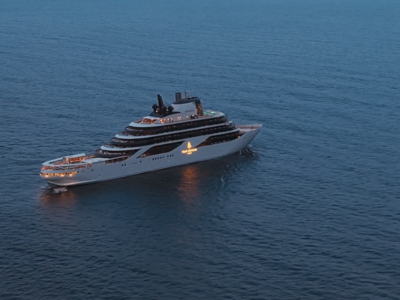
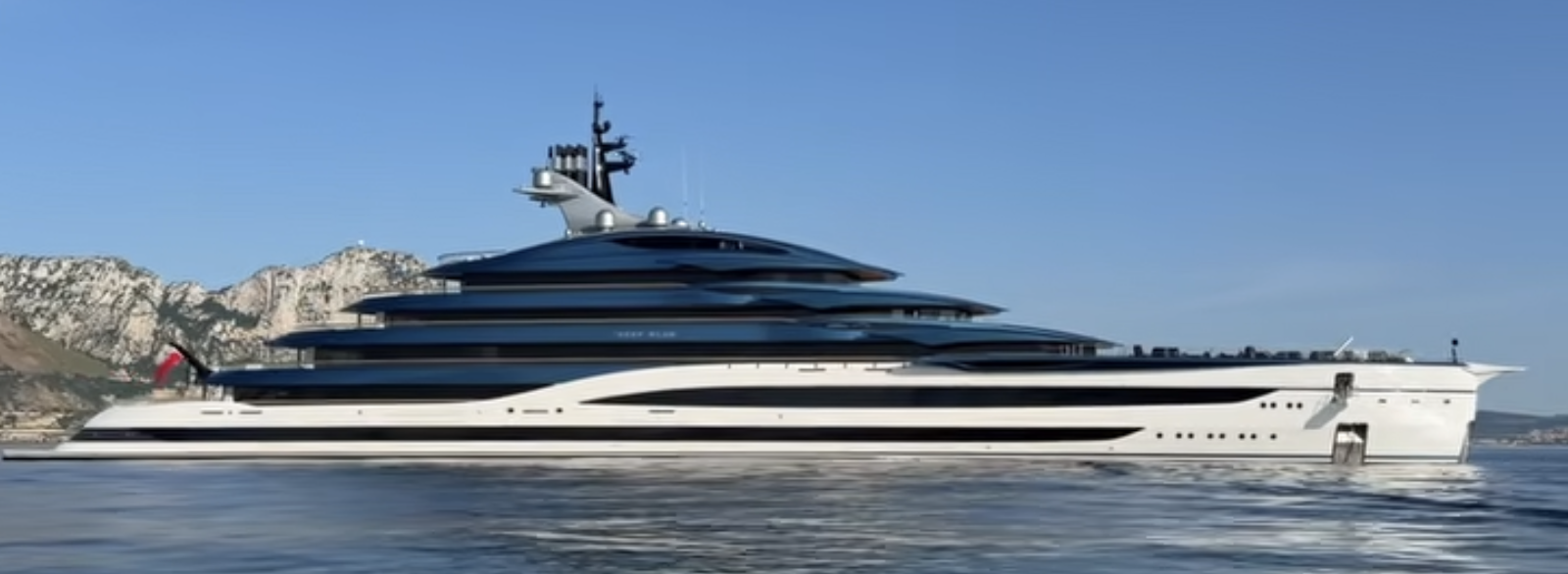
There is a moment in the life of every superyacht when it ceases to be a secret kept behind shipyard gates and becomes a living thing on the water. For the vessel that the world now knows as MY Deep Blue, that moment came on a bright morning in April 2026, when she rounded the breakwater at Antibes and slid into the Mediterranean light for the first time as a finished ship. The cameras came up. The jaws came down. And the yachting world, which thought it had seen everything, realized it had not.
For nearly five years, she had existed only as a rumor. Construction began at Lürssen’s Bremen facility in 2021 under conditions of almost theatrical secrecy. Yard workers signed non-disclosure agreements. The project moved through the halls under a codename—Project Deep Blue. Even as her steel hull took shape on the floating dock, details were scarce. In an industry where leaks are as common as champagne corks, this was unusual.
Then, in July 2023, the hull was launched and assembled, the bow joining the main body with the slow, deliberate precision that only Lürssen can manage. The yachting press caught glimpses of her profile, but from a distance she was still an enigma. It would not be until June 2025 that she emerged fully, and even then, the full impact of her design was not immediately understood. She was big, certainly—134.22 meters of steel and aluminium—but size alone does not explain the way a vessel settles into the imagination. What explained it was the color.
The Rule That Was Meant to Be Broken
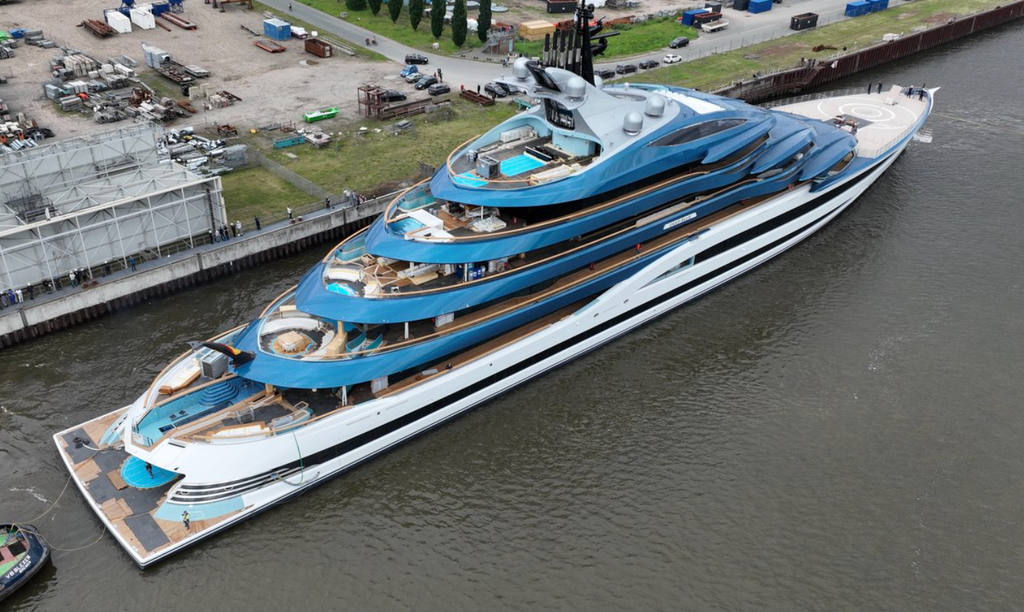
Superyachts, like navy uniforms and tuxedos, have long obeyed an unwritten rule: the hull is dark, the superstructure is light. It is a formula born of practicality and tradition, a way to manage heat and visual weight that has governed the look of the world’s largest private vessels for decades. Deep Blue looked at that rule and set it on fire. Her hull is white. Her superstructure is a deep, metallic blue. The effect is startling. From a distance, she appears to be wearing her shadow on top, as if the sky itself had dripped down and pooled above her waterline. It is a reversal so bold that it borders on provocation, and it makes her instantly identifiable from miles away. Where other yachts whisper, Deep Blue shouts in a voice that is somehow still elegant.
The color scheme is the work of Winch Design, the London studio that handled both her exterior and interior. But the studio did not stop at paint. The stern of the yacht is a cascading series of tiered decks that step down toward the sea like a waterfall frozen in teak and glass. At the lowest level, a beach club opens directly to the water, its platforms folding down to erase the boundary between lounge and ocean. Above it, a curved infinity pool sits on the upper aft deck, its vanishing edge dissolving into the horizon. The overhangs are deep, the shadows dramatic, and the overall effect is of a vessel that has been carved rather than constructed.
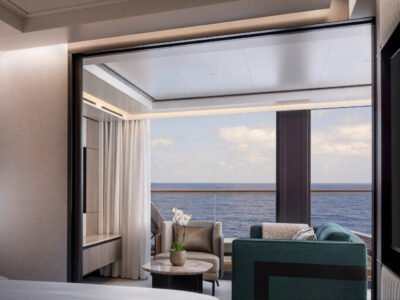
On Deep Blue, the structural framework is set back by roughly thirty centimeters from the glazing itself, allowing for uninterrupted panels of glass that stretch like sheets of clear ice along the main decks. The result is an interior that feels exposed to the sea in the best possible way, a salon that does not so much look at the water as breathe it in. It is the kind of detail that guests will notice without knowing why they feel so connected to the ocean around them, and it is exactly the sort of subtle genius that separates a good yacht from a great one.
The Engineering Behind the Beauty
Of course, beneath all of this beauty lies the engineering that makes it possible. Lürssen is not a shipyard that tolerates compromise, and Deep Blue carries the full weight of that philosophy in her bones. Her steel displacement hull was designed in-house by Lürssen’s naval architects, optimized not for speed alone but for the quiet efficiency of motion that owners of this caliber demand. Eight MTU diesel engines provide the power, pushing her to a top speed of around sixteen knots with a comfortable cruising range in the twelve to fourteen knot bracket. For a vessel displacing roughly 9,079 gross tons, these figures are not merely respectable—they are a testament to the hydrodynamic refinement that happens long before the first coat of paint is applied.
Her beam of 19.8 meters and draft of 5.1 meters give her the internal volume to accommodate spaces that most people will never see in photographs. The owner’s suite, the guest cabins, the spa, the cinema, the formal dining rooms and the crew quarters all exist behind those vast panels of glass, arranged with the operational logic that Lürssen builds into every deck plan. There is a helipad forward, because at this level of the market, a yacht is not just a home but a logistical hub, a floating estate that must receive guests by air as easily as by sea. She sails under the Cayman Islands flag, a choice as standard in this world as a Swiss bank account, and she carries the quiet confidence of a vessel that knows she will be compared to every other yacht launched this decade.
The Billionaire and the Alias
The identity of her owner has been the subject of intense speculation since her arrival in Antibes. When she was finally delivered in January 2026, the secrecy ended. By April, she was in the Mediterranean, her metallic blue superstructure catching the southern sun, her white hull cutting through the same waters that have carried the world’s most famous ships for centuries. The yachting community, which had spent years guessing at her appearance, now had its answer.
A New Standard on the Water
In the end, what makes this yacht fascinating is not any single specification, though the numbers are impressive enough to fill a naval architect’s notebook. It is the attitude she carries. She is the product of a German shipyard that has spent a century and a half building the impossible, a British design studio that refuses to be boring, and an owner who clearly wanted something that no one else had. She is 134.22 meters of argument against the idea that superyachts have reached the limits of imagination. And as she settles into her cruising life, moving from Antibes to Monaco to the quiet anchorages of the Aegean, she will serve as a reminder that the sea is still large enough for surprise.
The world will build bigger yachts. It may even build faster ones. But for a moment in 2026, the harbor fell silent when Deep Blue arrived.