listen to the audio of this article
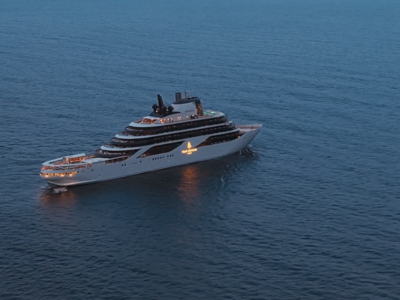
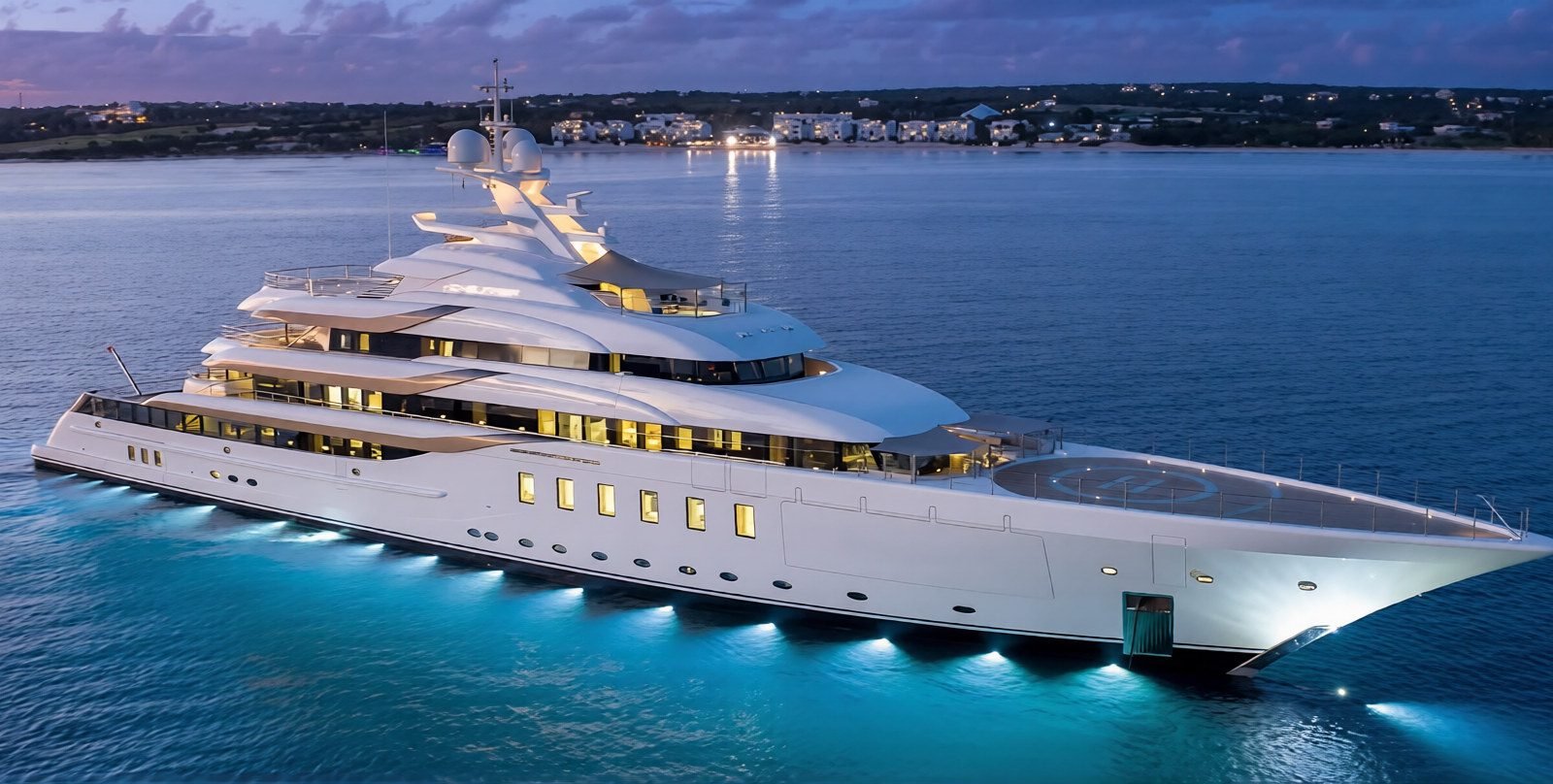
There’s a moment, somewhere around the third pass through her main-deck salon, when it becomes clear that CC-Summer was never going to be another white-on-white superyacht content to disappear into the horizon. At 95 meters — 311 feet, 9 inches, if you’re counting dock space — she is unmistakably a Lürssen, the German yard responsible for some of the largest, most technically ambitious yachts ever launched. But where many vessels of her size lean on scale alone to make their case, CC-Summer makes hers with color, warmth, and a level of personalization that took three years and eight months, and by some counts thirty-four separate floor-plan revisions, to get exactly right.
Delivered in 2019 under her original name, Madsummer, the yacht was built at Lürssen’s Rendsburg facility for an owner who arrived at the project already fluent in yachting. He’d previously owned a 55-meter Feadship and a 78-meter Lürssen, and by the time conversations turned to a new build, he wanted something bolder. The brief reportedly began at 85 meters and grew, deck revision by deck revision, to the 95-meter hull that eventually splashed down the ways. It’s the kind of evolution that only happens when a client and a yard trust each other enough to keep redrawing the lines until the proportions feel inevitable rather than merely large.
A Silhouette Built on Restraint
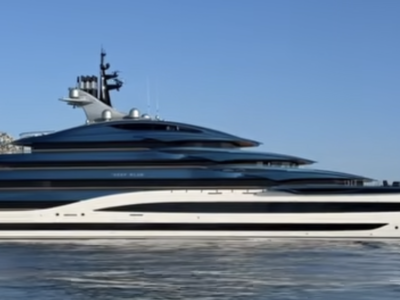
The exterior lines belong to Harrison Eidsgaard, the design studio whose fingerprints are on a run of the most photographed Lürssen launches of the past decade. Here, the studio’s touch is less about swagger and more about balance: a low, confident sheer line, a superstructure that reads as sculpted rather than stacked, and proportions the yard itself describes as timeless rather than trend-driven. It’s a silhouette engineered to still look right in twenty years, which, on a yacht built to be owned and enjoyed for decades rather than flipped for the next Monaco season, is precisely the point.
Beneath that exterior sits a steel hull and aluminum superstructure spanning a 14-meter beam and a draft of just under four meters — dimensions that translate to roughly 3,200 gross tons of interior volume, distributed across five decks. Twin MTU diesels, each producing in the neighborhood of 3,400 horsepower, give her a top speed around 18 knots and an easy cruising gait in the low-to-mid teens, with a range approaching 6,000 nautical miles. That’s an Atlantic crossing with room to spare, or a season spent hopscotching from the Mediterranean to the Caribbean without giving the fuel gauge a second thought — an itinerary CC-Summer has in fact become known for since entering the charter market.
Where Lürssen Quietly Shows Off
The real flex, though, is buried in the engine room, and it’s the sort of detail that only makes sense once you understand how much modern superyachts have come to resemble floating small towns in their power demands. CC-Summer was fitted with what Lürssen has called a first-of-its-kind load-leveling system for house electricity: three variable-speed generators — two rated around 350 kilowatts, one closer to 540 — feeding a battery bank of roughly 54 kilowatt-hours, housed in a cooled two-meter cube tucked aft in the lower engine room. The battery buffers sudden spikes in demand, the kind that come from a galley and a laundry room firing up simultaneously, so the system never has to lurch into starting another generator or straining an existing one just to keep the lights — and the air conditioning, and the espresso machine — running smoothly. It’s invisible to a guest sipping a drink on the aft deck, which is exactly the intention.
Interiors That Read Like a Coastline
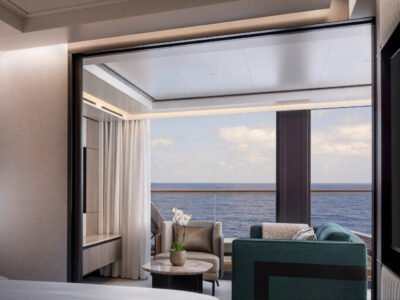
Where the exterior plays it cool, the interior, designed by Studio Laura Sessa, leans into an elegant maritime palette — tones that echo sand, sea glass, and late-afternoon light rather than the monochrome minimalism that has become almost a cliché of the segment. Every stateroom was customized down to the finish, and the yacht’s charter configuration accommodates up to a dozen guests across nine or ten individually styled cabins, several described as VIP suites in their own right rather than mere overflow from a single showpiece master.
That master suite occupies the upper deck in full-beam glory, with 180-degree sightlines, a private terrace, and its own outdoor Jacuzzi — the sort of layout that turns a sunrise into a private event rather than something glimpsed through a porthole. Two skylights do quiet, clever work knitting the decks together: a frosted, walk-on version on the main deck visually connects to the aft sea terrace below, while a second skylight on the upper deck comes with an integrated fireplace, engineered for the cooler evenings that even the Mediterranean occasionally delivers.
The lower deck’s beach club is the yacht’s social center of gravity, opening onto a sea terrace that turns the swim platform into genuine living space rather than an afterthought bolted onto the transom. From there, the amenity list reads like a small resort’s: a spa and hammam, a beauty salon, a movie theater, a grand piano tucked into the salon, an elevator running through the decks, a gym, a dance floor for evenings that run long, and a teppanyaki grill and firepit on deck for the ones that start with dinner under the stars.
A Toy Box Built for Adults
Superyacht charter guests have grown accustomed to a baseline of jet skis and paddleboards; CC-Summer’s tender garages — one forward, one aft — go considerably further. They house a pair of Maori Yachts limo tenders, roughly 10 and 11 meters respectively, alongside a fleet that includes a flyboard rig for guests chasing something closer to flight than flotation, a Ski Nautique for wakeboarding purists, seabobs, dive gear for exploring reefs the old-fashioned way, and half a dozen personal watercraft for anyone who’d rather just go fast. It’s a program built less around checking amenity boxes and more around making sure a two-week charter never runs out of ways to fill an afternoon.
Where She Sails Now
Chartering primarily across the Mediterranean and Caribbean under the name CC-Summer — a rebrand from her original Madsummer identity — the yacht is now overseen by a crew of roughly thirty, split across silver-service-trained interior staff and deck and engineering teams tasked with keeping that load-leveling power system, and everything else aboard, running invisibly well. Ownership details, as is customary for yachts of this caliber, remain largely private; what’s public is the result — a vessel that ranks among the largest hundred-odd yachts on the water today and stands as one of the more distinctive entries in Lürssen’s long catalog of oversized ambition.
Yachts this size are, almost by definition, statements. CC-Summer’s is unusual only in what it declines to say. There’s no shortage of scale, speed, or engineering pedigree here — Lürssen doesn’t build any other way — but the yacht’s real argument is that bigger doesn’t have to mean colder. Between the fireplace skylight, the beach-toned interiors, and a beach club built to be lived in rather than photographed and forgotten, CC-Summer makes the case that 3,200 tons of steel and aluminum can still feel, unmistakably, like a home.