listen to the article
Beneath the surface of the luxury yacht industry lies a market so exclusive that its products are measured not in square footage or knot speed, but in atmospheres of pressure and meters of depth. At the center of this rarefied world is Triton Submarines, a Florida-based manufacturer whose name has become synonymous with the absolute pinnacle of manned underwater exploration. From superyacht tender garages in Monaco to the crushing blackness of the Challenger Deep, Triton submersibles operate at the extremes of human engineering—and they are overwhelmingly the choice of those who demand the best.
The Triton Philosophy: Four Categories, One Standard
Triton does not build toys. It builds tools for exploration, divided into four distinct product lines that cover virtually every underwater mission a client might conceive.
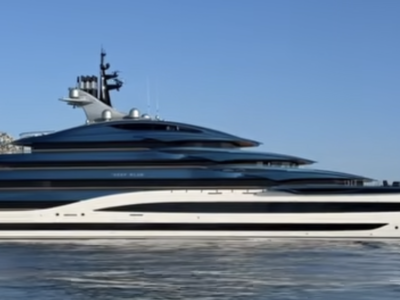
Leisure Submersibles are Triton’s entry point for private owners and yacht enthusiasts. These are the vessels that nestle into the tender garages of the world’s most expensive superyachts, including the 323-meter residential gigayacht ULYSSIA. Designed for comfort and spectacle, leisure models feature Triton’s signature premium-grade acrylic pressure hulls—completely colorless, crystal-clear, and engineered with the same refractive index as water, meaning the hull effectively vanishes from view when submerged. The result is an immersive, distortion-free panorama of the deep that no glass-bottom boat or ROV screen can replicate.
Commercial Submersibles scale the experience for operators who need to carry paying guests. These are the largest single-hull acrylic submersibles ever manufactured, offering uncompromised all-around viewing for tourism ventures, resorts, and experiential travel companies.
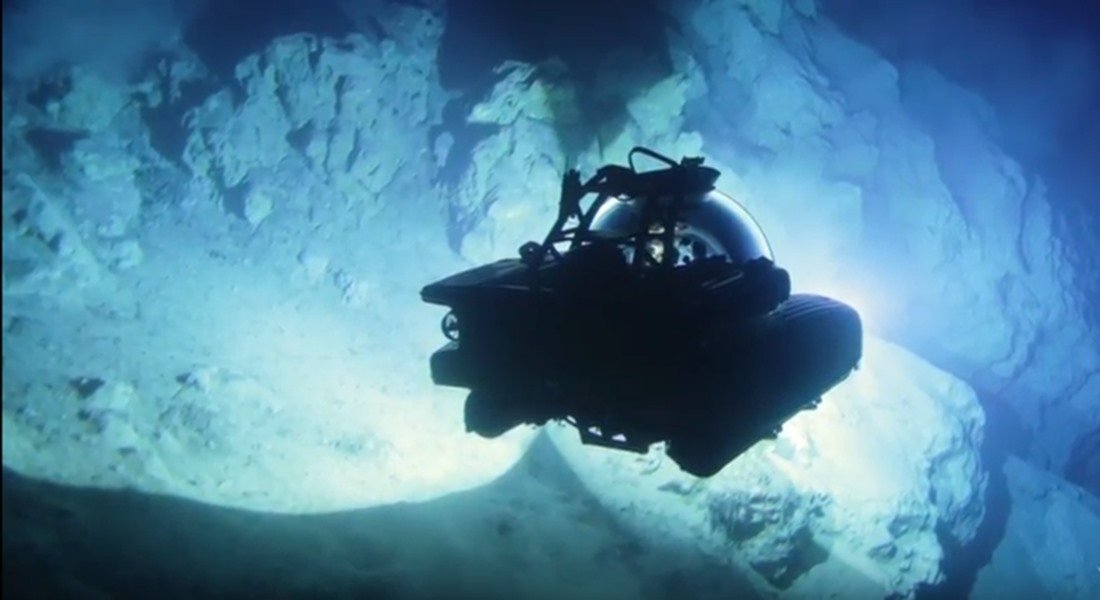
Professional Submersibles serve filmmakers, documentarians, and scientists. This is the line that made David Attenborough’s Blue Planet II possible. When the BBC needed a submersible capable of capturing never-before-seen footage of the Great Barrier Reef, they turned to Triton. The company’s professional models are the de facto standard for production companies and research institutions that require utility, performance, and dependability under demanding conditions.
Hadal Submersibles represent the apex of Triton’s engineering ambition. These are the only crewed submersibles in the world certified to reach the Abyssal and Hadal zones—the deepest points of the ocean. Triton owners hold more depth-related world records than those of any other manufacturer, a claim no competitor can match.
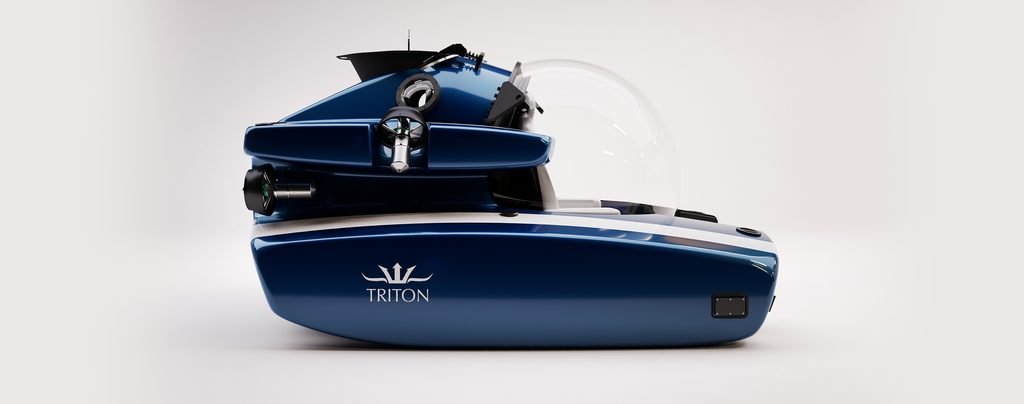
Triton
From Vero Beach to the Challenger Deep
Triton Submarines LLC was founded in 2008 in Vero Beach, Florida, by L. Bruce Jones and Patrick Lahey, a pair of submersible veterans with decades of experience in manned underwater vehicles. In 2019, the company relocated its headquarters and manufacturing facility to Sebastian, Florida, where it continues to design and build its vessels alongside a European subsidiary in Barcelona, Spain.
The company’s breakout moment came with the development of the DSV Limiting Factor (Triton 36000/2), the first commercially certified full-ocean-depth crewed submersible in history. In 2019, this two-person titanium sphere descended to the Challenger Deep in the Mariana Trench, reaching a record depth of 10,925 meters (35,843 feet)—the deepest crewed descent ever achieved. The vessel was later sold to Gabe Newell’s ocean research group Inkfish and renamed Bakunawa, continuing its mission of deep-ocean science.
This achievement was not a stunt. It was a certification. The Limiting Factor was the first and only full-ocean-depth submersible certified by an internationally recognized third-party classification society, setting a safety benchmark that the rest of the industry is still scrambling to meet.
The Product Range: From 200 Meters to the Hadal Zone
Triton’s portfolio spans nearly every conceivable underwater mission, from reef sightseeing to trench exploration.
The Triton 660/2 AVA is the company’s design-forward leisure model, featuring a free-form acrylic pressure hull that delivers three times the interior volume of traditional dual-hull designs. It descends to 200 meters with two passengers.
The Triton 1650/3 LP (Low Profile) is the world’s smallest, lightest, and most compact three-person production submersible, specifically engineered to fit inside a standard superyacht tender garage. Standing just 1.8 meters tall and weighing 4,000 kilograms, it reaches 500 meters with an endurance of 12 hours—enough for an entire day of submerged exploration. Priced from approximately $3.3 million, it has become the default choice for yacht owners who want serious underwater capability without modifying their vessel.
The Triton 3300/3 MKII is Triton’s most popular professional model and the benchmark by which all other professional submersibles are measured. Capable of reaching 1,000 meters with three occupants, it is the submersible that made Blue Planet II and the BBC’s Galapagos documentaries possible.
The Triton 3300/6 scales the same 1,000-meter depth rating to a six-passenger luxury configuration, designed for experiential travel operators who refuse to compromise on comfort.
At the extreme end sits the Triton 36000/2, the full-ocean-depth system that proved human beings could visit the deepest point on Earth safely, repeatedly, and under commercial certification.
High-Profile Backers and Collaborations
Triton’s credibility extends beyond engineering into the highest echelons of exploration and finance. In 2010, billionaire Ray Dalio, founder of Bridgewater Associates, commissioned Triton to build him a personal submersible. When the company faced a financial “extinction event” in 2012 due to supply chain problems, Dalio extended an emergency loan that saved the firm. By December 2022, both Dalio and filmmaker James Cameron had become investors and minority shareholders, lending their names and capital to Triton’s continued expansion.
In 2017, Triton collaborated with Aston Martin on Project Neptune, an ultra-luxury submersible based on the 1650/3 LP platform but styled with design language borrowed from the Aston Martin Valkyrie hypercar. The partnership produced improved hydrodynamics, more powerful thrusters, and an aesthetic that blurred the line between automotive art and underwater engineering.
More recently, real estate billionaire and private astronaut Larry Connor commissioned the Triton 4000/2 Abyssal Explorer, a $20 million submersible designed to voyage to the wreck of the Titan submersible implosion site. The mission was explicitly intended to prove that such deep journeys can be conducted safely when proper certification, materials, and engineering discipline are applied—a clear distinction from the experimental approach that led to the Titan tragedy.
Safety as a Selling Point
In an industry where the Titan disaster cast a long shadow over private submersibles, Triton represents the gold standard of safety. Every vessel is built to standards set by classification societies such as DNV and Lloyds. The company’s acrylic hulls are not novelties; they are engineered pressure vessels with decades of proven performance. Triton’s insistence on third-party certification, redundant systems, and conservative engineering margins has made it the overwhelming choice for demanding professionals and discerning individuals alike.
The Ultimate Yacht Accessory
A Triton submarine is not merely an extravagant toy. It is a tool for genuine exploration—a means to leave the cocktail party on the sundeck and, within the hour, be floating in darkness three hundred meters below, surrounded by creatures that have never seen sunlight. In a world where luxury is increasingly defined by the exclusivity of experience rather than mere possession, Triton offers something that no amount of marble or gold leaf can replicate: access to a world that remains more mysterious than the surface of the moon.